Tennessee is home to two species of fox, the red fox and the grey fox. Despite their names, color isn’t the best way to tell these beautiful animals apart! An animal can be a member of the red fox species but have nearly any color fur, including silver, white, yellow, brown, and even lavender! This fellow here is a melanistic red fox.
There are several ways to tell our native foxes apart. Red foxes always have a white-tipped tail, while grey foxes always have a black-tipped tail. Grey foxes are more common in forested areas, while red foxes are well-adapted to urban environments. Grey foxes also have round pupils whereas red foxes have slit-shaped pupils. If you ever see a fox in a tree, that’s also very telling, since only grey foxes can climb trees thanks to their retractable claws!
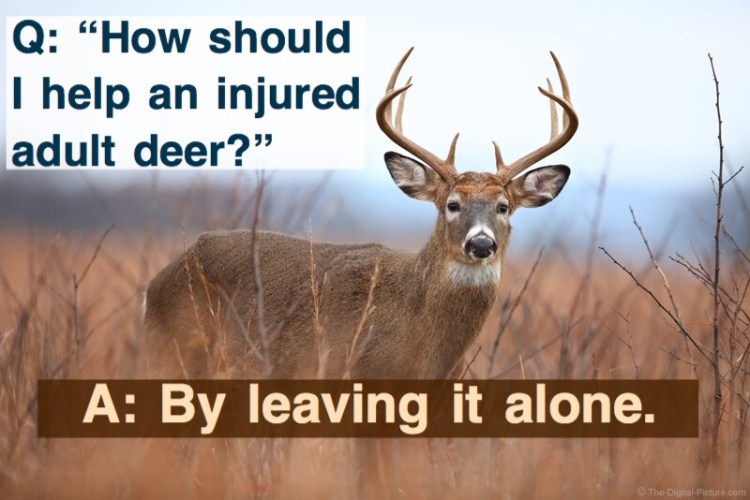
It’s hard to see an injured animal without stepping in to help. But in the case of adult deer, the best way to help is to step back.
Deer are extremely susceptible to a strange, complex disorder called capture myopathy. When captured, many of them simply die, even if they get the best possible care. The risk of dying of capture myopathy is often much greater than the risk of dying from injury.
Capturing an injured deer can be catastrophic for other reasons as well. Here in Tennessee, adult deer can’t be legally rehabilitated, so you won’t be able to find a veterinarian or wildlife rehabilitator who can help. Adult deer are also very large and dangerous, so you’d be putting yourself in harm’s way by attempting to help.
Does this mean you’ll just be leaving the deer to die? Not necessarily! Deer often survive broken legs, deep wounds, broken antlers, castration, and worse! But if a deer is so badly wounded that there’s no possible way it will survive, your local animal control or police may be able to euthanize it to prevent suffering. It’s worth calling them if a situation seems truly hopeless.
No one is shocked when they see rabbits, squirrels, mice, chipmunks, frogs, deer, and birds in the suburbs. Yet, when their natural predators— even the smallest of them— exist in the same environment, it nearly always leads to someone requesting that they be moved somewhere they perceive as more appropriate.
Native predators like red foxes, grey foxes, bobcats, and coyotes are not displaced guests in the suburbs, but a normal part the landscape in our region, even in heavily populated areas, just like other familiar urban animals like robins and cottontails.
There is no habitat for any animal more suitable than the one is has already chosen. More remote territories are already filled to capacity with competitors, and sudden relocation is an instant death sentence for any predator.
If you’re fortunate enough to have foxes (or other natural exterminators!) controlling rodents in your neighborhood, there is no reason to kill, remove, or relocate them somewhere “better.” These animals are already right at home in their natural habitat.
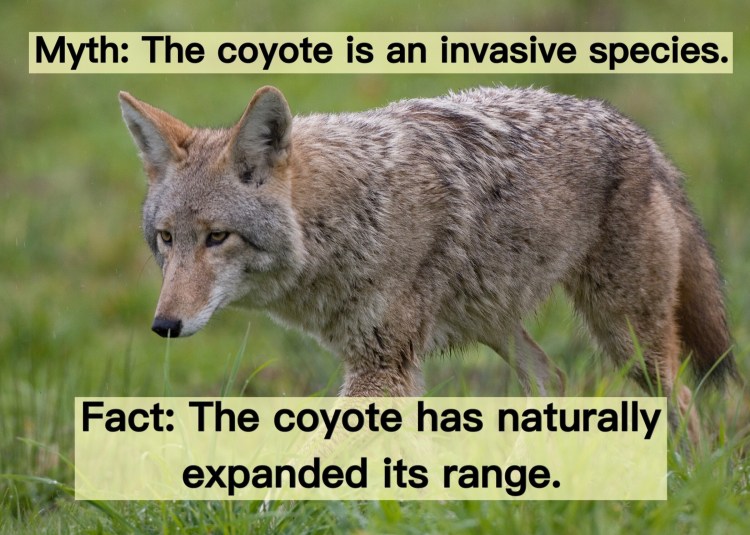
Coyote hunters often justify their “sport” with claims that, East of the Mississippi, coyotes are an invasive species and therefore detrimental to our ecosystem.
If coyotes were truly “invasive,” that would certainly be a problem. Invasive species are animals that unnaturally enter an area due to humans, such as nutria, feral hogs, and outdoor cats. Truly invasive animals do cause serious problems when unchecked. The coyote, however, is not one of these species.
Coyotes are relative newcomers to the Eastern United States— that much is true. Although they did live here during the last ice age and played a role in the genesis of our native red wolf, they were gone for over 12,000 years between their last stand and their current presence.
After their prolonged absence, coyotes did come back across the Mississippi, but they were not artificially introduced here by humans. Rather, they naturally expanded their range to fill the holes that humans left in the ecosystem when we eliminated apex predators like bears, pumas, and wolves. In the absence of large predators, our deer, rabbit, and rodent populations exploded and coyotes arrived to help restore balance, and they have done just that.
Ecosystems change over time. Species adapt, move, and die— this is the pattern of nature that we all live with. Coyotes haven’t come to the Eastern US in a way that is artificial or detrimental, but have naturally introduced themselves exactly where they were needed.
As a classic “keystone speciesc,” American beavers are among the most important native species found on our continent. These enormous animals comprise the second-largest rodent species on Earth, sometimes weighing in at 100 pounds or more, and an impact to match their size! Here are five ways beavers are good for an ecosystem.
1. Beavers improve water quality. A colony of beavers creates a dam that dramatically slows water current and allows water-purifying plants to thrive. They help protect freshwater ecosystems during droughts and increase the amount of water purified as it percolates into underground wells. Studies have found that in areas where livestock are raised, the presence of beavers can help to remove wastes like E. coli, nitrogen, phosphates, and strep.
2. Beavers help waterfowl raise their young. A beaver’s dam increases the amount of surface water in a wetland, multiplying the number of usable nest sites on a given piece of land. Beaver lodges are also among the safest and most viable places for trumpeter swans, Canada geese, and native ducks to raise their families. In Wyoming, one study concluded that the presence of beavers increases the number of water-birds by 7500%!
3. Beavers build natural nest boxes for birds and mammals. As humans have eliminated most of America’s old-growth forests, animals that depend on hollow trees are facing serious problems. Beavers help to address that! When their dams “drown” waterside trees, these trees quickly attract woodpeckers, which, in turn, create cavities where swallows, owls, flying squirrels, wood ducks, and kestrels can safely raise their young.
4. Beavers help trout and salmon. Trout and salmon in the United States are in big trouble, and ecologists suspect that their population declines could be a result of historic over-trapping of beavers. Beaver dams all over the continent provide winter habitats and safe spawning sites for cutthroat trout, bull trout, steelhead trout, Dolly Varden trout, brook trout, rainbow trout, and brown trout, coho salmon, Chinook salmon, and sockeye salmon. In some areas, the presence of beavers has been shown to increase these fishes’ populations tenfold. This impact helps feed humans, bears, and dozens of species of bird.
5. Beavers promote tree health and diversity. In the short-term, it may look like beavers harm forests, but long-term observations have shown the opposite. Many tree species regrow after being cut by beavers, and others depend on the rise, retreat, and flow of water from dams to spread and germinate their seeds. Beavers also increase the amount of surface water in a forest, which reduces the likelihood of catastrophic forest fires.
Beavers are one of the greatest treasures of the North American ecosystem. Without them, our entire continent’s ecology could collapse. Appreciate, and learn to coexist with, these incredible animals!
We’ve received several calls from animal control, pest control companies, and veterinarians asking us if we can accept “nuisance” raccoons— typically removed from attics— for rehabilitation. Well-meaning people often drop families of raccoons off at those locations, expecting that they will be successfully rehabilitated and then released at a mythical location called Somewhere Else.
Unfortunately, in 100% of these cases, the raccoons were killed.
Not only does For Fox Sake not have the resources or space to take in “nuisance” animals, but doing so is strictly forbidden under state law— as is relocating a “nuisance” raccoon under any circumstances whatsoever. That’s because of serious concerns about the spread of diseases like canine distemper, raccoon roundworm, and rabies, which may have no symptoms at the time the animal is relocated.
Even if you were to ignore regulations and relocate the raccoons yourself, that will never end well for the animals, and euthanasia is preferable. Relocated raccoons, especially mothers with kits, don’t have safe dens or nest sites and will quickly be killed by rivals or out-competed for food.
What’s a home owner to do? You don’t have to live with an attic full of trash pandas, but you can choose kinder alternatives. Raccoons normally respond consistently to “hazing” with bright lights and loud noise. A mother may take a few days to relocate her young, but she will leave.
If you do need to trap a raccoon to remove her, be sure to hire a professional, who can ensure that any babies have been safely removed and reunited with Mom— otherwise she will destroy your roofing trying to get back in, and her babies will die a painful death. A professional can also help you make sure that the entry points are completely closed to keep future unwanted guests out.
Please don’t put us— or your veterinarian— in the position of helplessly being forced to euthanize a whole family of innocent animals because you thought that live-trapping would end well. Choose kindness.
A house finch with mycoplasmal conjunctivitis.Ever have a really bad case of pink-eye? It’s uncomfortable, itchy, painful… and without treatment, it can even spread enough to cause blindness and death. As any teacher or parent knows all too well, bacterial conjunctivitis is also extremely contagious.
That’s why, if you happen to see a feathered neighbor with eyes like this, it’s important to take down your bird feeders immediately. In birds, these goopy, painful eyes usually caused by an extremely contagious infection called mycoplasmal conjunctivitis. It appeared about 25 years ago in house finches, who caught it from chickens.
Uncontrolled, mycoplasmal conjunctivitis spreads rapidly through communities of birds, who leave the bacteria on feeders and in bird baths, and also exchange germs directly when crowded around a single site looking for food. Infected birds eventually become blind and may struggle to breathe and fly, leading to death.
You can help control the spread of mycoplasmal conjunctivitis and other diseases by removing your bird feeders, at least temporarily, when you see signs of illness in your visitors. Be sure you wash them thoroughly before hanging them back up!
A bat will rarely, if ever, get stuck in human hair.
Bats are victims of widespread fears and misconceptions, and these often lead to people harming them or their habitats.
One common misconception is that bats frequently swoop into women’s hair and become entangled in it. In some regions, people claim that this will cause people to develop chronic headaches, lice, or rabies, while other regions have dramatic tales about bats collecting hair for witches to use in curses.
Fortunately, bats rarely, if ever, actually get tangled in anyone’s hair. Here’s why:
Bats actually have no motive at all to dive into anyone’s hair. Despite old superstitions, a bat doesn’t collect hair to use in curses or anything else. Bats do not build nests like birds do, and don’t collect food from the fur or hair of any animals.
A small, vulnerable animal not much bigger than a mouse isn’t going to take a chance on confronting an animal as large or dangerous as a human. Vampire bats don’t live anywhere in the United States and, even in areas where they are common, humans are not their normal target. If you’re here in the United States, any bat you see is looking for bugs, not blood.
Despite the popular idiom “blind as a bat,” most bats actually have great eyesight in addition to their excellent system of echolocation. An animal capable of hunting gnats in the night sky clearly knows how to get around without running into things, so a bat’s chances of blindly encountering a human are slim to none.
Rabies is another concern often brought up by people convinced of the myth that bats fly into hair. Although we typically think of rabies as a disease that causes extreme aggression, fury is not a particularly common symptom of rabies in in bats. Instead, a rabid bat is likely to be lethargic, weak, disoriented, and unable to fly. Some rabid bats may even look completely healthy. Rabies isn’t likely to lead a bat into someone’s hair.
So why does the myth persist?
Bats adore mosquitoes– they’re among their favorite foods!– and mosquitoes love human blood. Where there are mosquitoes swarming around people, sometimes bats will swoop low to snatch the bugs… and maybe, every once in a while, a bat has actually brushed against someone’s scalp. It’s also possible that, at some point or another, a bat might have gotten tangled in someone’s hair, but if this has occurred at all, it is certainly not a common or ordinary experience.
People love to invent exaggerate stories about animals they perceive as frightening. It has happened since the dawn of humanity, when we huddled by fires and told stories of terrible monsters lurking in the dark. And it still happens today, throughout the world. Since bats have a reputation for being very scary, it’s predictable– though unfortunate– that they’re the target of many such tall tales.
If you did have direct contact with a bat, follow up with your doctor and your county health department to make sure you don’t need post-exposure rabies treatment as a precaution. But please don’t fear them or hate them.
Be kind to your bat neighbors and help dispel misconceptions. The bats you might see outside are working hard to fill their bellies with mosquitoes and other pests that spread serious diseases. They’re not interested in your hair.
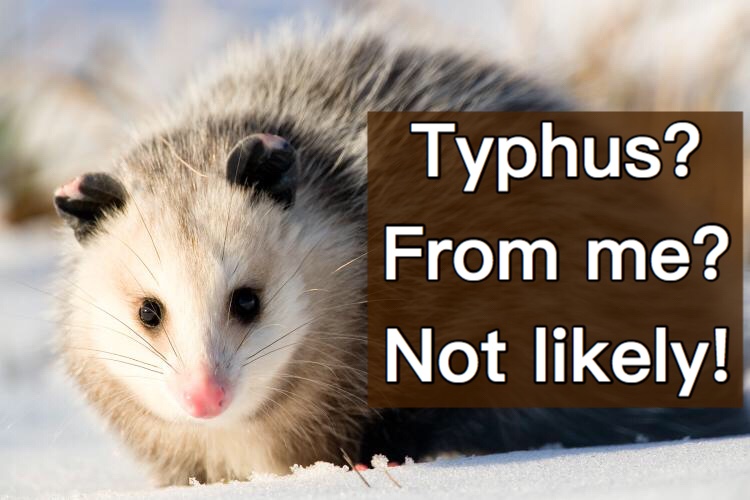
Many people worry that their opossum neighbors spread murine typhus.
The Virginia opossum’s rat-like appearance and association with filth leads many people to associate it with disease. In the last few years, many people have been alarmed by headlines about opossums spreading murine typhus in Los Angeles, and it has reignited fears about this gentle marsupial.
No mammal actually spreads murine typhus. Typhus is caused by dangerous bacteria spread through the poo of a specific type of flea, known to some as the “cat flea.” Cat fleas, as their names suggest, prefer to snack on kitties and are often found in enormous numbers in colonies of feral cats. Cat fleas have also been found on the bodies of dogs, mice, rats, and, most recently, opossums. They most likely made the jump from cats to opossums when opossums dined with feral cats at outdoor feeding stations.
Any time a human touches an animal with cat fleas, there is a risk that the flea could jump from the animal to the human, bite the human, and poop on the human’s skin. If the person scratches their skin and gets the flea poop in an open cut, they might catch murine typhus. All of this requires a series of very unlikely events happening at the same time, and opossums aren’t a likely culprit.
The most important way to prevent murine typhus is through avoiding exposure to cat fleas. If you have pets, use effective flea treatments year-round. Use good home hygiene and effective pest control to keep flea-carrying rodents away from your house. If you have a flea infestation in your home, address it promptly.
If you do see a cat, dog, or wild animal— including an opossum— that needs help, please don’t handle it without gloves and call a professional, licensed rescuer to assist. But unless you’re personally handling opossums without gloves on a regular basis, your odds of catching murine typhus from them are nearly nonexistent.
The blue or Maltese bobcat had beautiful silver and black fur.
Blue bobcats are also called “Maltese,” a term popularized among cat breeders for blue-grey cats. As with house cats, blue bobcats happen when a bobcat is born with two copies of a gene that causes melanism (black coloration) and also two copies of the dilution gene, which lightens the animal’s fur.
Both of these genes are very rare in bobcats, but have historically been recorded primarily in the South, where our dense forests historically provided a shadowy habitat where dark bobcats could hunt more effectively.
From 1700 to 1900, there were only a few records of trappers selling blue bobcat fur. These rare animals were presumed extinct until a trophy hunter in Grimes County, Texas spotted this animal and killed him.
It’s possible that the world may see another blue bobcat one day, maybe even right here in Tennessee. Unfortunately, blue bobcats and other rare color phases of bobcat don’t have special protections in most areas, so any remaining blue bobcats are at a very high risk of being killed for their beautiful fur.
This isn’t the first time history has seen the extinction of a “Maltese” wild cat. The bobcat’s distant cousin, the Bengal tiger, was also said to once exist in a blue-grey form, but none have been sighted since 1925.






 For Fox Sake Wildlife Rescue