There are Raccoons in my Trash!

In nature, a raccoon’s job is to be the janitor who disposes of decaying animals, rotten eggs, dead fish washed ashore, and spoiled fruits. It’s only natural that they smell our trash and think it’s meant to be theirs. If your local trash pandas have been foraging in your garbage can, you can discourage them using a heavy can with a latching lid. This will not only deter raccoons, but also opossums, stray cats, dogs, rats, mice, and even bears.

I Found a Fawn! What now?

Babies like this are often kidnapped by well-meaning people who mistake them for orphans, but this baby doesn’t need help.

Mother deer will often leave their babies alone for up to several hours a day, often hidden in underbrush, tall grass, or leaves. The fawn knows to lie down and be very still, to avoid attracting predators.

Capturing a fawn is bad news. Fawns kidnapped from the wild often die even with the best care, and almost always die when raised by people with no training or experience. Kidnapping a fawn from the wild is also illegal in most states.

If a fawn truly does need help, you’ll usually know. A genuinely orphaned fawn will be visibly thin and dehydrated. Its ears will be curled and it may be surrounded by flies, or even covered in fly eggs or maggots. Orphaned fawns will also sometimes follow humans around in confusion and desperation. In these cases, it is a good idea to call a rehabilitator for advice on the next steps to take.

The best thing you can do if you find a healthy fawn is to simply leave it alone. Quietly take a few pictures if you’d like, and then carefully step away. If the fawn is on your own property, you might also want to help protect it by bringing your pets inside until the mother has returned.

Found a Dead Opossum? Check its Pouch!

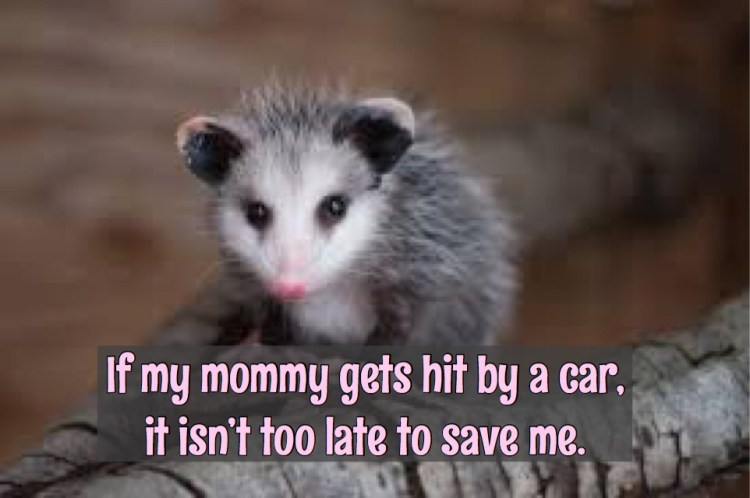
Car collisions are a leading cause of death for adult opossums. When an opossum is terrified, it enters an involuntary comatose state (“playing possum”) and freezes in place. This is great for dissuading predators, but evolution didn’t prepare the opossum for automobiles.

The good news is that, if you see a dead opossum, it might not be too late to save a life (or a whole pouch full of lives!) Simply put on a pair of gloves and check for a pouch on the animal’s lower abdomen. If you don’t have gloves on hand or are simply too squeamish to handle a dead opossum, give a wildlife rehabilitator a call and they can likely send a volunteer to help.

If you find joeys still attached to the mother’s nipple, it’s very important not to remove the joey yourself or you could cause it serious injury. If the joeys have fur and open eyes, it may be safe for you to remove them from the pouch yourself. Please contact your local opossum rehabilitators for help with your next steps!

Can I Move Wild Baby Rabbits?

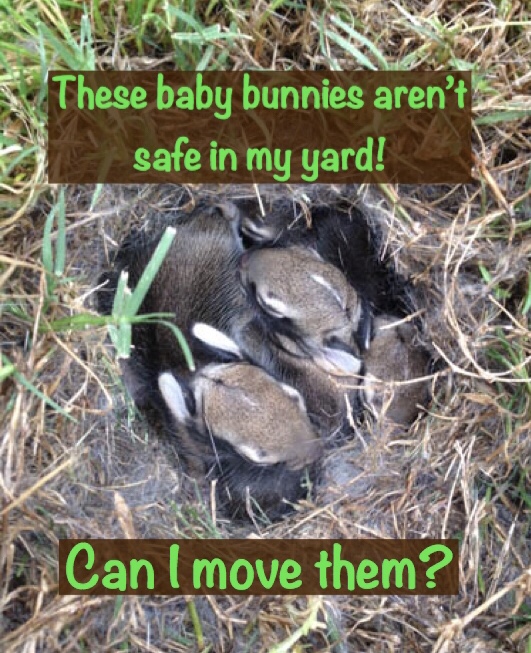
Many people call wildlife rescues asking for help rescuing or relocating cottontail rabbits found in their yards. While it’s wonderful that so many people want to protect wild bunnies, the best way to keep them safe is to simply leave them exactly where they are.

Cottontail mothers are not particularly attentive, and only come to their nests twice a day, morning and evening. This helps prevent predators from finding the nest. If the nest is moved somewhere else in the yard, the mother will never find it, and the babies will starve.

Moving the babies into captivity isn’t a good idea, either. Even with the very best care, cottontails raised by wildlife rehabilitators have extremely high mortality rates, with only a few surviving to release age. Wildlife rehabilitators are the best choice for a truly orphaned or injured rabbit, but a healthy baby animal’s best chance of survival is always with its mother.

Worried about dogs? Don’t be. Cottontails have essentially no smell whatsoever, so your dog won’t be drawn to the nest unless he happens to see the mother during her twice-daily feeds. The mom already chose your yard as a safe place to raise her kits, and wouldn’t have done so if she believed your dog was likely to harm them. You can keep your dog inside at dawn and dusk for extra protection, but the babies’ best chance for survival is still in their own nest.

Do Opossums Spread Disease?

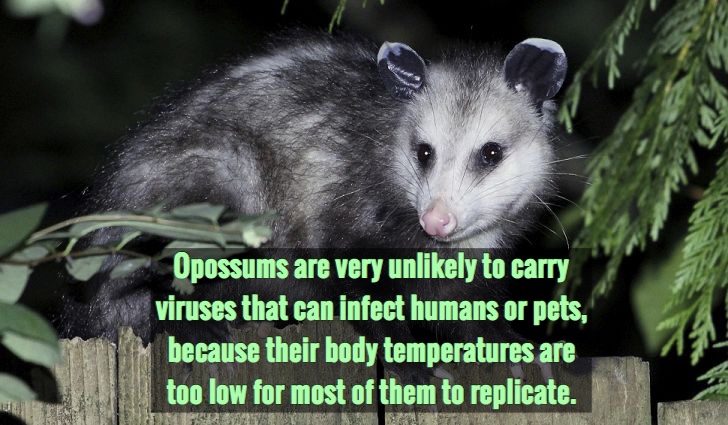
Opossums look a little bit like huge rats, so they’ve been mistakenly associated with disease. But, with very few exceptions, opossums can’t and don’t carry the same viruses that infect humans and pets. An opossum’s normal body temperature is typically around 93-94 degrees, and sometimes as low as 89-90 degrees.

Most diseases affecting pets or humans— like rabies, canine distemper, canine parvovirus, panleukopenia, flu, and norovirus—can be carried by many animals with higher body temperatures, but can’t replicate in an opossum’s body unless the opossum has a fever. It’s extraordinarily rare for humans or pets to catch diseases, especially viruses, from opossums.

With that being said, it’s a good idea to use common sense and proper hygiene around any wild animal, because even the “cleanest” wild animals carry bacteria and parasites in their poo and on their fur. If you need to clean up a mess left by any animal, wear rubber or latex gloves.

When is a Cottontail Independent?

Mother cottontails only feed their babies twice a day, and a rarely seen. But, even if a baby cottontail is definitely orphaned, it does not necessarily need help. Once a bunny is the size of a softball, it no longer needs its mother’s care and shouldn’t be captured or “rescued.” Cottontail rabbits are extremely sensitive and often die from the stress of being captured, so it is important to leave them alone whenever possible. If you’re concerned about the safety of a juvenile bunny, keep your pets properly contained, and wait a day or two to mow your lawn.

The Smoke-Phase Turkey

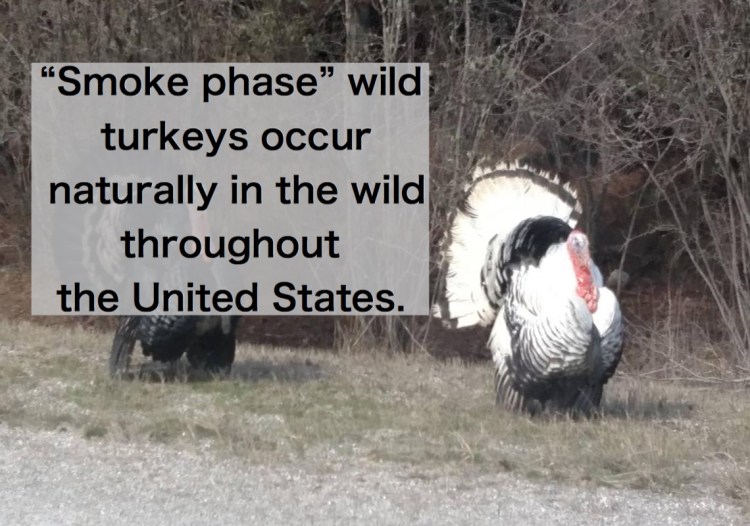
These beauties occur throughout the United States, including right here in Tennessee! Smoke-phase turkeys are distinctly different from albinos and can range from solid white, to pale grey, to— like this fellow here— white with handsome black markings. These gorgeous patterns are a natural occurrence in wild turkeys and do not mean that the turkey is a domestic breed or hybrid. Have you ever seen a smoke-phase turkey in the wild?

Tennessee’s Dusky Gopher Frog Extinct Statewide

Conservationists need highlight the struggle of this precious animal, which native to our home state. The dusky gopher frog was once found in wetlands throughout the South, ranging as far north as middle Tennessee. Due to the extreme loss of suitable wetland habitats, dusky gopher frogs haven’t been seen in Tennessee in over twenty years, and their wild population now consists of just a few adults at Glen’s Pond in Harrison County, Mississippi. Fortunately, conservationists are working hard to revive this critically endangered animal, and it may one day be seen again here in Tennessee.

Fledglings Don’t Need Help

Especially in the spring and summer, you’re likely to see a baby bird awkwardly hobbling on the ground, barely able to fly, possibly crying for its mother. It’s understandable that many well-meaning people mistake these babies for orphans. They are actually doing just fine and are under their parents’ care!

If a bird has feathers and can hop or attempt to fly— however clumsily— it is in the fledging stage of development. Like a human baby transitioning to toddlerhood, a fledgling will have some slips and stumbles and may, at times, appear helpless, but this is all a normal part of its development that will pass in time.

It may feel difficult to leave a baby bird on its own, but a baby animal’s best chance of survival is always with its parents. Birds are excellent parents and will make sure the baby is fed and protected during this challenging stage, which typically lasts only a couple of days. In the meantime, you can help protect fledglings by keeping cats indoors and encouraging your neighbors to do the same.

Is a Coyote Likely to Have Rabies?

Fear of rabies are one of the most common reasons that people kill coyotes. While it’s certainly not a good idea to approach, provoke, or handle any wild animal, coyotes are actually one of the less likely carriers of rabies in the United States.

In the 1970s, mass vaccination helped to eradicate the strain of rabies that preferentially infects dogs, wolves, and coyotes. Although this strain is often seen in other countries, and any mammal can catch any strain of rabies, the epidemic of rabid dogs and coyotes is long-gone from the United States.

Statistically, a coyote is much less likely to carry rabies than a stray cat, a raccoon, or even a cow. When coyotes do have rabies, they typically contract it from another species and don’t typically live long enough to spread the virus.

With that being said, if you do see a coyote that appears to be sick or unusually aggressive, it’s a good idea to keep a distance and contact your local animal control or game wardens as soon as possible. While it’s unlikely that the animal is rabid, any sick or aggressive coyote could be dangerous.