Dealing with Zombie Raccoons

Zombie raccoons aren’t rare. You may see a raccoon that is staggering, grunting, standing on its hind legs, and periodically collapsing into an unresponsive coma. It may even have glowing green eyes that appear blind.

It looks terrifying, but there’s no need to hoard canned food and ammo. This “zombie syndrome” is caused by canine distemper virus, which spread to wild raccoon populations from domestic dogs. Canine distemper is not the same thing as rabies and is not contagious to humans.

That said, if you do see a zombie raccoon, it’s important not to touch or handle it, and to keep pets and children inside. Although distemper is not the same thing as rabies, there is no way to completely rule out rabies without having the animal’s brain tissue tested. Unvaccinated dogs are also at a very high risk of catching the disease from wildlife.

How to handle a zombie raccoon.

A raccoon with distemper, unfortunately, needs to be put to sleep. You can generally arrange to have a zombie raccoon put to sleep by contacting your local animal control. In some cases, a wildlife rehabilitation volunteer can also arrange to capture the animal to take it for euthanasia and testing.

Never Paint a Live Turtle’s Shell!

Turtles with painted shells.
Painting a turtle’s shell is cruel and dangerous.

Painting a turtle’s shell, whether the turtle is a pet or a wild animal, is an act of cruelty that causes the animal very serious harm. Turtle shells are not “dead”— they are part of the animal’s living organ system. Turtles absorb sunlight through their shells and convert it to vitamin D. When the shell is coated in paint, it blocks the absorption of this essential nutrient, leading to a serious disorder known as metabolic bone disease. The turtle’s shell, jaw, and internal body become deformed and it ends up dying a slow, painful death. Turtles with painted shells also lose their natural camouflage and are left as clear targets for predators. If you’d like to use turtle shells in your art, use the shells of animals that have already passed away of natural causes. A living turtle’s shell needs to be left alone.

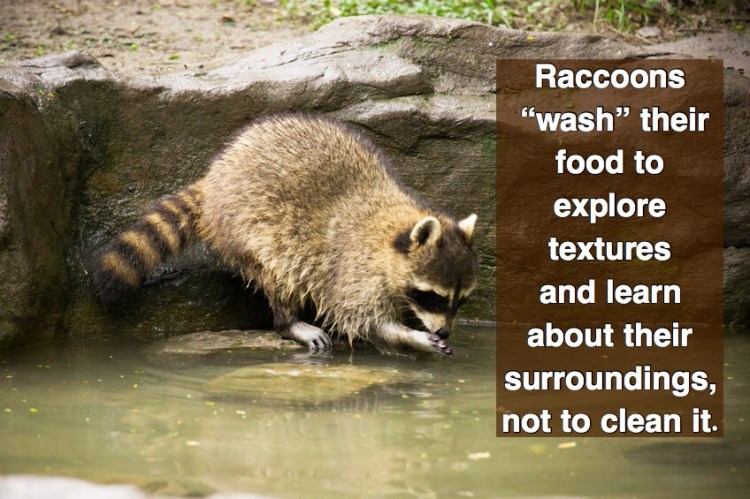
Why Raccoons Wash Their Food

Why raccoons wash their food.
Is he really washing it?

Raccoons are famous for “washing” their food. In fact, in many languages, the term for raccoon translates to “washing bear!” But raccoons actually don’t care about hygiene much— they’ll often choose to use the same body of water as both a latrine (communal toilet) and as a place to fidget with their food. Raccoons have an extremely sensitive sense of touch, especially in their hands, and enjoy using water to help them explore an object that interests them.

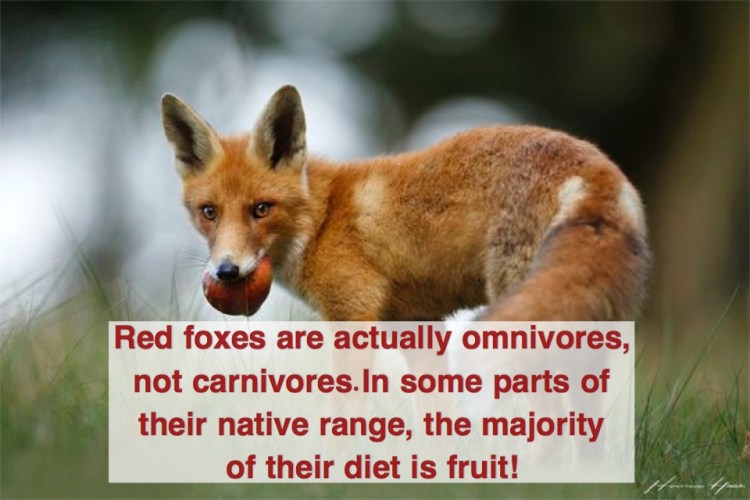
Red Foxes: Omnivores, not Carnivores!

A red fox eating fruit.
Foxes eat plant-based foods in addition to meat.

The red fox is the most widely distributed member of the dog family in the world. Part of the reason for its success is its ability to thrive on almost any diet, ranging from nearly nothing but meat in some areas, to nearly nothing but fruit in others. Here in East Tennessee, a fox’s typical diet is up to 50% fruits, nuts, tubers, vegetables, nuts and grasses during the summer and fall, but mostly small mammals during the winter and spring.

Why Do Rehabilitated Animals Have Ear Tags?

A lot of people are uncomfortable when they see ear tags on the animals here at For Fox Sake. And, believe me, I understand why. Animals in rehabilitation are not pets or livestock; they are meant to return to the wild one day. And it would be horrible to cause unnecessary pain to an animal.

Here’s why every animal at For Fox Sake is ear tagged before release.

I do everything in my power to try to ensure that the animals here do not become habituated or tame. I want them to be independent and unfriendly— to go into the wild knowing that they are wild. However, despite my best efforts, there is a chance that one of the animals here will encounter a person one day.

That may happen when a raccoon decides to move into someone’s cozy, warm attic. Or when a fox starts nibbling the cat food on a suburban porch. Or when a skunk follows someone on a hiking trail, begging for food. Or when a raccoon wanders into one of the live-traps that the USDA uses for rabies surveillance.

An ear tag on a raccoon.

In all these situations, an ear tag would help trace the animal back to me. Whoever responds to the call for help would know that this animal has been vaccinated for rabies, which would help determine the appropriate course of action. It would also help me to know if there is something I am doing wrong, that might lead the animals to seek out humans, or if I’m releasing them too close to residential areas.

Another reason for ear tags is that they help to positively identify animals. I would love to think that I could never make a mistake and that I know every animal in my care by name and face. But, to be honest, I can’t entirely guarantee that I might not mix up two raccoon kits from the same litter who have similar markings. Ear tags help me know which animal is which so I can accurately record their medical history, location where they were found, weight, immunizations, and behavior.

Even if I personally did not think this was necessary, I also don’t have a choice in the matter. For the types of animals I care for, ear tagging is a state legal requirement, not a choice.

I sincerely appreciate the concerns of people who have questioned ear tags on wildlife. I understand your discomfort and I’m glad you care, but ear tags are a necessary part of life for the animals in my care.

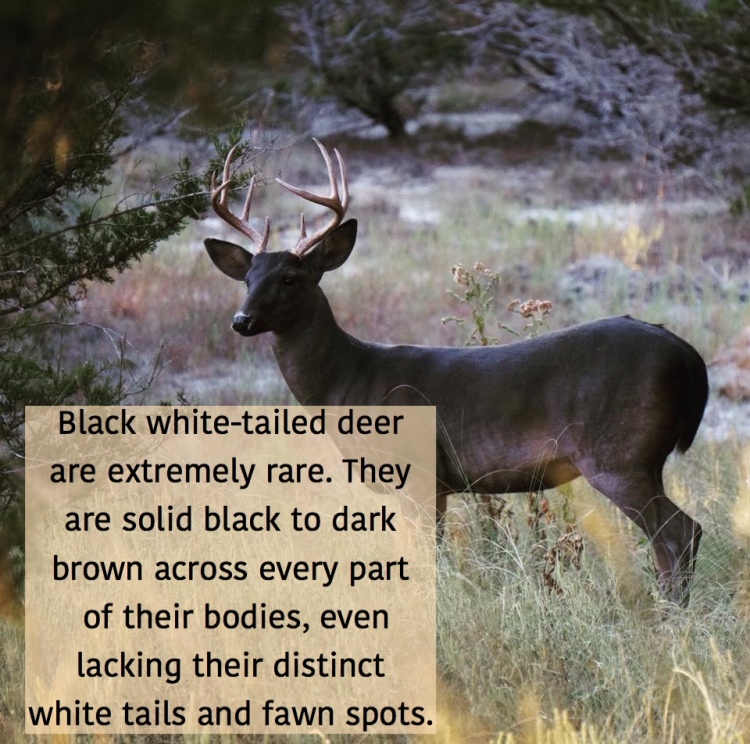
Melanistic (Black) Deer

A beautiful black buck.
Black deer are very uncommon.

This gorgeous buck was born with a mutation that causes melanism. Animals with this trait are extremely dark in color and lack all the characteristic shades of white and brown typically seem in white-tailed deer. Black deer can be seen in any part of the country, but, for reasons not fully understood by scientists, they seem to be most common in areas with dense forests and deep drainage systems.

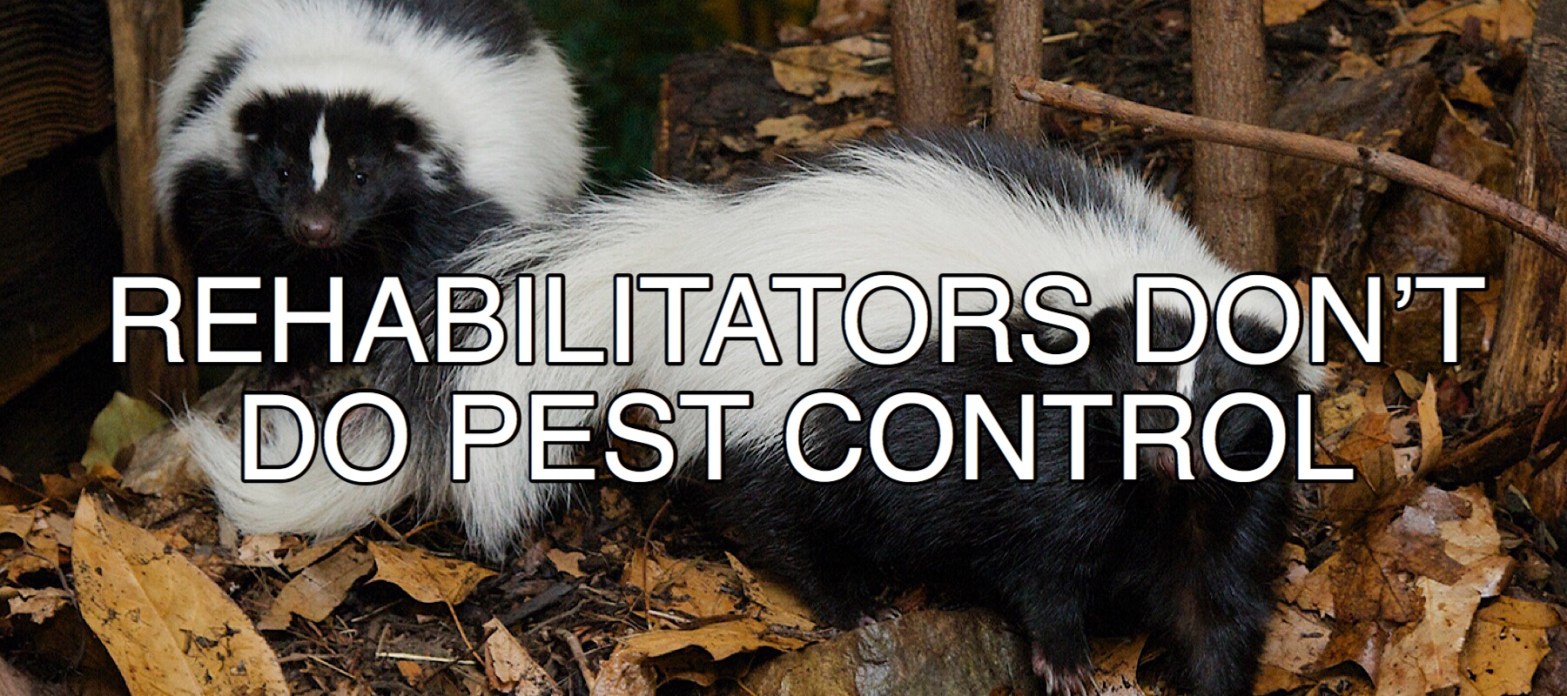
Rehabilitators Don’t Do Wildlife “Removal” or Pest Control

Wildlife rescues aren’t a free pest control service.

A surprising number of calls that wildlife rehabilitators take have nothing to do with wildlife rehabilitation. They come from people who want a healthy, safe, happy animal removed from their property because they simply don’t want it there.

“Removal” of healthy wildlife is the opposite of what rehabbers do. Relocating an animal rarely ends well because the animal is placed in an unfamiliar setting full of competitors, often with too little food, and it may be separated from its mate or babies in that process. In some states, including here in Tennessee, it is actually illegal to relocate some animals because of the spread of diseases, many of which can affect humans and pets.

A wildlife rehabilitator may be able to advise you on how to peacefully coexist with a wild neighbor— ways to humanely repel a family of raccoons or fox-proof a chicken coop, for example. But a rehabilitator is almost always a volunteer who dedicates countless unpaid hours to rescuing animals, not someone who drives around collecting chipmunks and opossums to take from the suburbs to the woods.

Found A Baby Raccoon? Don’t Touch!

Found an orphaned baby raccoon? Don’t touch!
Handling a baby raccoon can be dangerous.

Every year, wildlife rehabilitators, game wardens, and veterinarians are forced to euthanize hundreds of healthy raccoons. In most parts of the country, raccoons are considered rabies vector species. This does not mean that it is likely that they have rabies; only that they are at a greater risk than, say, a rabbit or goat. Because of this, most states require that any raccoon that has bitten a person must be tested for rabies. Rabies testing can only be done by euthanizing the animal to examine its brain tissue.

I hate having to kill innocent baby animals. It’s the opposite of the goal of a wildlife rehabilitator, but it’s state law and I am obligated to follow it. If you handle a raccoon and are scratched or bitten— even superficially, even by a healthy-looking baby— I have no option but to euthanize it. Please don’t put me in that position.

Raccoon fur can also carry the eggs of Baylisascaris procyonis, a form of roundworm that is fatal to humans but harmless to raccoons. If you handle a raccoon bare-handed, you could die even if you are never bitten or scratched.

If you find a baby raccoon, please… for their sake, for your sake, for my sake: do not handle it bare-handed, only with a trap or bite-resistant gloves. Even if you find a baby too small to have teeth or to bite, you should at least put on a pair of gardening gloves or latex gloves before picking it up.

Swan Decoys Deter Geese and Ducks

Ducks and geese native to the United States are protected species— they can’t be killed, removed, or have their nests destroyed, unless you have a permit from the U.S. Fish and Wildlife Service. So what can you do when you’ve got geese and large ducks wreaking havoc and harassing pets and humans?

The most important way to dissuade aggressive waterfowl is to simply ignore them. If no one is feeding or approaching the birds, they will usually stop approaching people and will be content to raise their young uninterrupted. If that’s not enough, or if you need to dissuade them from using the same nesting site next year, consider purchasing realistic decoy swans like these. Swans are very large and territorial, and most ducks and geese have no interest in settling down in a pond where they believe swans are nesting. Swan decoys are most effective in repelling geese if they are installed before, not after, a nesting season begins, so now is a great time to install them if you’re concerned about aggressive geese in your neighborhood or business.

Suburban Coyotes Save Lives

In the entire recorded history of the United States, coyotes have killed exactly two people. While these deaths are horrific tragedies, they are extraordinarily unusual… especially when compared to the 150 Americans who die every single year as a result of car accidents involving deer, and the dozens of people who are attacked by bucks in rut.

White-tailed deer are beautiful animals that are vital to our ecosystem, but they are also horrifically overpopulated. In the past few centuries, the elimination of grey wolves, pumas, and bears from most of the U.S. led to a massive explosion in deer populations. Scientists say that the U.S.’s ecosystem can sustain about eight deer per kilometer. The current average? One hundred deer per kilometer. This extreme density isn’t good for the ecosystem, and their overpopulation is causing human deaths.

Enter the coyote. This adaptable, intelligent predator spread its range eastward after its cousin, the grey wolf, was extirpated. It poses much less of a danger to humans, pets, and livestock than bears or pumas, making it suitable for human-populated areas where larger predators (and human hunters) would be too dangerous. Although it’s uncommon for a coyote to prey on healthy adult deer, they thin out the sick, weak, and elderly members of a herd and are likely to keep deer-involved car accidents more limited.

Of course it may be alarming to hear coyotes in your suburban neighborhood, but they are statistically very unlikely to hurt you or anyone in your family. Keep your pets inside after dark and avoid leaving pet food outside. Let coyotes do their job of helping to re-stabilize an ecosystem that has been harmed.