Tennessee Rehabilitators Can’t Save Bats

In Tennessee, even wildlife rehabiliators who are permitted to handle rabies vector species can NEVER accept a bat for rehabilitation. Although the state of Tennessee will allow specially licensed rehabbers to handle foxes, skunks, and raccoons, the handling of wild bats is strictly forbidden due to their disproportionately high risk of rabies. Please do not endanger yourself by attempting to capture or handle a sick or injured bat to take it to a rehabber. Instead, promptly report it to Tennessee Wildlife Resources Agency and the Tennnessee Department of Health.

The Stinky Ketchup Packet That Could

You might find something like this on your property or along public forest trails. It’s about the same size and shape as a ketchup packet and smells like rotten fish. Believe it or not, this little packet protects you, your pets, and your family. The USDA drops these in areas (including Hamilton County) where raccoon-variant rabies has been known to occur. Raccoons find the packet and eat the contents, and it provides them with immunity to rabies. If you find one, simply leave it where it is, or, if it’s in an area accessible to a pet or child, just put on a pair of gloves and move it. Don’t worry, though— even if it was handled by a human or pet, it doesn’t pose any danger besides an unpleasant odor.

Tennessee’s White Foxes

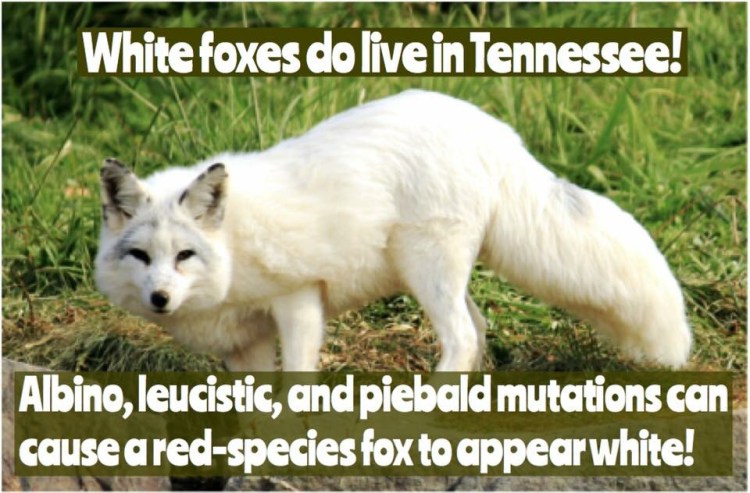
Few are lucky enough to spot a white fox in the wild here in the Southern U.S., but it does happen! I had the privilege of seeing one of these rare beauties in Northeast Alabama in 2008. Contrary to popular belief, a white fox in the Southern U.S. is not necessarily an escaped pet or an introduced exotic species. They are members of the red fox species carrying genes for albinism, leucism, or extreme piebald mutation. Red foxes with these mutations do occur naturally in the wild.

How to Feed Raccoons Properly

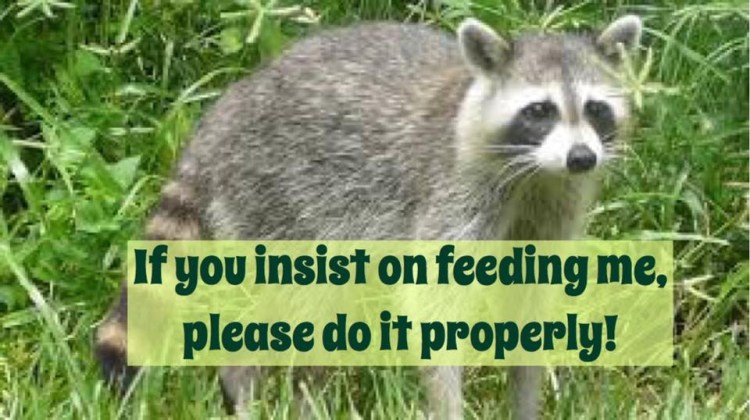
It’s not a good idea to feed wild raccoons, but there are a lot of people who will do it anyway. If you absolutely insist on feeding a wild raccoon, please follow these guidelines:

-Do not allow the raccoon to see you leaving food. If the raccoon starts begging humans for food, someone will believe it is rabid or a pest, and it will end up being euthanized.

-Leave food scattered through your property, not in a bowl on your porch or steps. Feeding a raccoon on your porch or steps could lead to it trying to break into your home. These critters are smart and nimble, and can do a lot of damage when they decide they want to come inside.

-Do not feed the raccoon daily. This will cause it do become dependent and it will lose its ability to naturally forage.

-Don’t feed raccoons if you have free-roaming cats or dogs on your property. This will spread serious diseases between the animals and could lead to fights and injuries.

-Provide only cat food, dog food, fresh fruit, and eggs. Do not feed junk food, dairy products, or processed grains to a raccoon.

-If a raccoon figures out that you’re a food source and starts approaching you, ignore it and stop feeding it. Allowing the raccoon to become tame isn’t fair to the animal and could lead to human injury and illness.

-If you live in an area where bears are known to live, do not feed raccoons under any circumstances, or their much larger cousins will start coming to your home to eat. This is is very serious because bears who approach humans for food will kill or be killed, and the blame is squarely on those who feed them.

We all want to help our local wildlife, but please be smart and careful about it if you decide to feed your local trash pandas.

I Found a Rabid Raccoon! Help!

“Help! I found a rabid raccoon!”

This is one of the most frequent— and panicked— calls we receive in wildlife rehabilitation. If it happens to you, here’s what to do:

-First, stay calm. The animal probably isn’t actually rabid. Raccoons can be awake in the daytime for any number of reasons. If it looks healthy, it’s probably fine. If you see neurological symptoms like staggering, circling, and vocalizing, that’s a much more serious concern, but these symptoms are usually caused by head trauma or distemper, not rabies.

-With that being said, don’t touch or trap the raccoon, and keep your kids and pets inside. Handling a sick raccoon, even with bite-resistant gloves, isn’t a good idea unless you’re an experienced expert who has had proper pre-exposure immunization.

You may need to call the following numbers:

-Your county health department. County health departments help to track and identify rabies and can work with the state, city, and national government to make sure the animal is captured and tested, especially if a human or pet was exposed.

-Your local municipal animal control. In most cases, they are responsible for capturing and euthanizing a wild animal suspected of having rabies, although this can vary by jurisdiction.

-If there is an emergency (like a clearly sick raccoon approaching people in a crowded public space) it may be appropriate to call 911. In some cases, particularly if animal control can’t respond, police can arrange to address the situation immediately when the animal is posing a serious threat to public safety.

-In some cases, a wildlife rehabilitator who is licensed to handle rabies vector species can help to trap or capture a sick animal and transport it for euthanasia and rabies testing. However, many avoid doing this because distemper viruses are highly contagious and it can be risky to allow our cages, traps, gloves, and carriers to be contaminated. If you’re able to find a rehabber who can help, please be kind and patient, and consider making a donation!

Foxes are Bad Pets

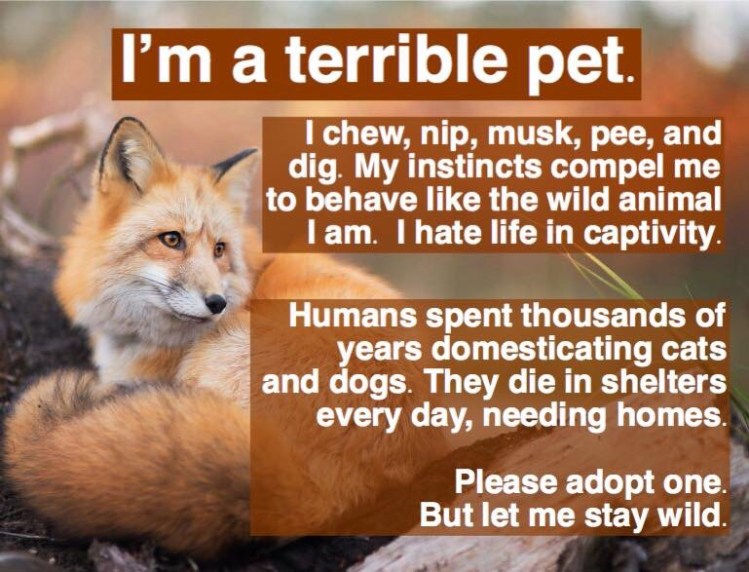
The desire to own a fox as a pet is understandable, but the capture, breeding, and selling of pet foxes isn’t fair to them. With the exception of domesticated Siberian silver foxes, which are not sold in the United States, foxes are wild animals with wild instincts and can not thrive as pets. If you find an orphaned or injured fox, please contact a wildlife rehabilitator. If you want a pet, there are hundreds of homeless cats and dogs that would love to join your family.

Can Raccoons Eat With Cats?

You may think it’s charming or cute if a raccoon starts frequenting your pet’s dish, but images like this are terrifying. Outdoor-roaming cats typically live short and often brutal lives, partially because they will often have encounters like these. In general, a wild raccoon poses little threat to a cat or dog, but— like any animal— raccoons may become aggressive if a pet corners them or takes away “their” food, or if they associate pets with food sources. Raccoons can seriously injure cats and vice versa: a tussle between these two could lead to death for both. Raccoons and cats also share many of the same diseases and may transmit them through shared dishes. Please keep your cats indoors and do not feed wildlife from pet dishes.

Grey Fox or Coyote?

Grey foxes are sometimes killed because of a case of mistaken identity. This shy and elusive animal may look similar to a coyote pup at first glance, but can be distinguished by its very long tail with a black tip, its orange ears, and a black stripe that runs down most of its body. They never grow much larger than a cat, so they pose absolutely no threat to pets or humans.

Canine Distemper Decimates Wildlife

Canine distemper originated in North American domestic dogs in the late 1800s. Ever since, this deadly family of viruses has spread like wildfire through wild foxes, wolves, coyotes— and even unrelated animals like lions, bears, skunks, and raccoons. Many animals, like the Ethiopian wolf and Amur leopard, are now facing imminent extinction due to distemper and other domestic-origin viruses. These conditions can spread from a pet to a wild animal if the wild animal sniffs your pup’s pee— no direct contact required! You can do your part to protect wildlife (and your dog!) by getting your dog all vaccines and boosters recommended by your veterinarian.

Handling a Raccoon: a Deadly Mistake

We often hear from finders who have handled wild raccoons without gloves— a mistake that’s very easy to make when it’s just a little baby. Some people will also hand-feed adults or attempt, illegally, to raise orphans as pets. Please be careful: this is very dangerous!

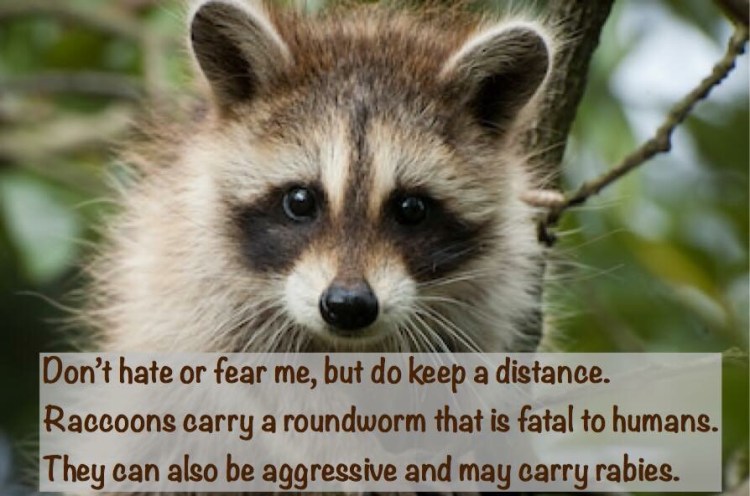
When raccoon roundworm enters the human body, the worm gets confused and ends up all over the body, eventually consuming the brain. Raccoons who lose their fear of humans often bite, leading to serious injuries and infections. Worst of all, raccoon-variant rabies does occur in our area and is nearly 100% fatal after symptoms appear in a person. Please don’t risk your life for a brief interaction with a cute animal.

That said, if you have not been scratched or bitten, and have not directly handled raccoon poop, you probably have nothing to worry about. Just get in touch with your doctor to be on the safe side, and be mindful in the future. Please respect wild animals from a distance.