To Fake a Broken Wing

It’s certainly understandable if you mistake this for a bird with a broken wing. This superb acting has been fooling would-be predators for millennia, and humans are no exception. But there’s no need to rush to call a wildlife rehabilitator. Chances are, this bird is actually just fine.

This is a mother killdeer. Killdeers live naturally through almost all of North and Central America and are a common sight through much of their range (though that may not be true for much longer, since their population is rapidly declining due to outdoor cats and habitat destruction).

When a mother killdeer sees a human or other animal near her babies— which are tiny chicks that live on the ground, rather than in trees— the mother pretends her wing is broken. This puts her in a very vulnerable position, but it often helps to lure the predator away from the chicks. It’s a very convincing display!

If you see a bird like this and it appears to be struggling on the ground with a broken wing, especially if it is making loud, sharp vocalizations, simply watch from a distance to see if she eventually gives up the act and flies. Do not approach or chase her, as this will often cause her to charge at you, which can break her neck and cause you a mild injury. Also, please avoid looking for her babies. You’re already near them, but actually finding them will distress their frightened mother even more.

There’s no need to intervene if you see a dedicated mommy doing this display. But it’s a great opportunity to admire the incredible lengths that a mother will go to, to protect her young.

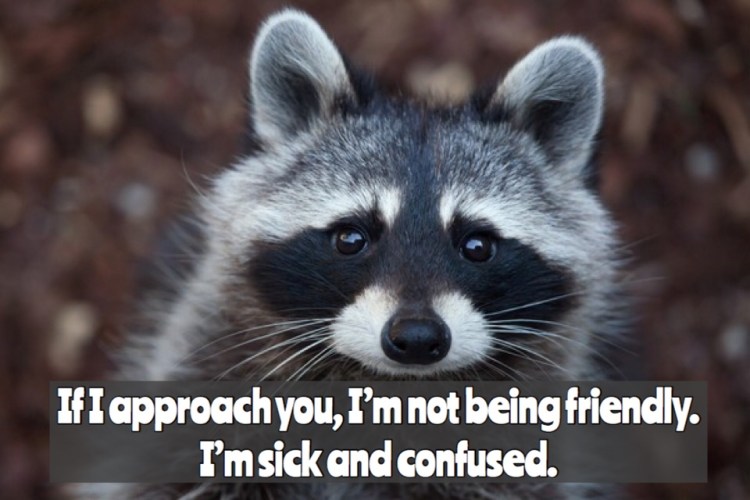
Sick. Not “Friendly.”

Pretty much everyone wishes they could befriend a wild animal. It’s not at all uncommon for people to be excited when a wild fox or raccoon seems to randomly approach them without fear. It’s human nature to project that the animal is seeking comfort or companionship, and to fantasize about being able to provide exactly that.

But, if you’re approached by a wild animal, chances are that something is wrong. All wild animals should have self-protective instincts that prevent them from seeking out contact with other animals, like us, who could harm them. When a raccoon or fox is approaching a human, it’s a sign that something is massively amiss.

In the best case scenario, the animal is approaching people because it has been tamed, possibly by being improperly hand-raised. A tame animal should never have been released to the wild, because they can not protect or fend for themselves.

More often, raccoons, skunks, and foxes approaching humans are suffering from canine distemper, a serious viral infection that inflames the brain and causes the animal to lose its instincts and sense of danger. The most dangerous possibility is that the animal is actually suffering from rabies, which can cause it to be fearless or “friendly” in the early stages of the infection.

It is not safe to handle any wild animal without proper training and protection, no matter how friendly it may seem. If you spot a wild animal that seems to want to be your friend, it’s important to call a wildlife rehabilitator, your local animal control, or your local game wardens as soon as possible, so the critter can get the help it needs.

Protect Wildlife:End Light Pollution

Here are some simple things you can do to reduce light pollution:

-Turn off your outdoor lights when not needed for safety.

-Replace your private street lamps and flood lights with motion-activated lighting.

-Use low-glare lighting fixtures for outdoor light. One company that offers star-friendly outdoor lighting is Starry Night Lights.

-Write to companies in your area about reducing their use of polluting lights. Lighting billboards from above, rather than below, can make a huge difference for wildlife.

I found a baby skunk! What now?

You look out your window and see a litter of skunk kits running around with no parent to be seen. What’s next?

Kits without their mother aren’t necessarily orphaned or injured. However, unlike some animals, skunks are typically attentive parents who don’t leave their babies unattended for very long. If you wait about three hours and still see no sign of mom, approach the babies and see if she comes running. If she does, slowly step away— she’s unlikely to spray you if you leave her alone. If there’s still no sign of her, it’s time to call a permitted skunk rehabilitator. If you’re in Tennessee, I’m happy to help!

You may be asked to provide short-term stabilizing care or to put the skunks in a box or carrier. Make sure to wear gloves— a pair of gardening gloves is a good option— when you do this. Do not give the animal anything to eat or drink, or you could risk making it extremely sick.

Please do not, under any circumstances, attempt to raise a wild skunk yourself. Skunks are among the most common carriers of rabies in the United States, and may not initially show symptoms. Skunks raised improperly are also likely to be irreversibly tame or to suffer serious bone defects caused by improper nutrition. But, if you find you have a passion for wildlife, consider volunteering with your local wildlife rehabilitation facility. More help is always needed!

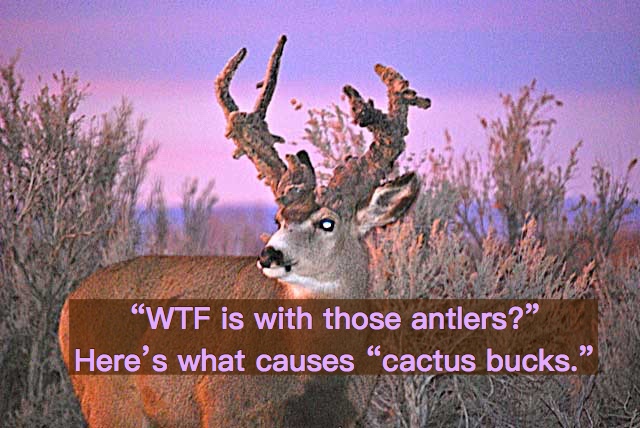
How Do Cactus Bucks Happen?

Deer like this are a rare sight, but have been spotted almost everywhere in the United States, and in almost every species of deer. These cactus bucks, as they’re called stand out because of their bizarre, deformed antlers covered in irregular growths.

A cactus buck’s irregular antlers develop due to low testosterone levels, which cause the buck’s antlers to produce velvet year-round. There are a few reasons these hormonal imbalances night occur. The most common cause is that one of both of the buck’s testicles are undescended. Another is that the buck caught a disease called epizootic hemorrhagic disease, which can damage the testicles. Occasionally, a buck will be accidentally castrated— for example, by a barbed wire fence— and will develop “cactus” antlers as a result.

Most cactus bucks are infertile and a few live with chronic pain or infection due to their conditions. If you spot a cactus buck who appears to be suffering, it may be worthwhile to call your local game wardens or wildlife rescue to see if the animal needs assistance.

Tennessee’s Box Turtles in Danger

It’s important to recognize the plight of wild animals right here in the Southeastern U.S. This handsome fellow is an Eastern box turtle, which has experienced a sharp population decline over the last few decades. Without intervention and protection, this once-common backyard guest could vanish forever.

The good news is that everyday people like you can help! If you see a box turtle crossing the road, stop and move it across the road in the direction where it is going. Under absolutely no circumstances should a box turtle be moved to another location, no matter how much “better” that location may seem. Box turtles have an internal GPS system that guides them to remain within a very limited home territory. If removed from that territory, they will spend the rest of their lives trying to get home, and most will die on the way and fail to reproduce.

It is also never acceptable to bring wild turtles home as pets. Wild turtles do not do well as pets and most die from diseases related to improper care. It is also illegal in most jurisdictions to remove these imperiled species from their natural habitat.

Pass the word on to your friends and family so they also know how they, too, can help keep box turtles safe!

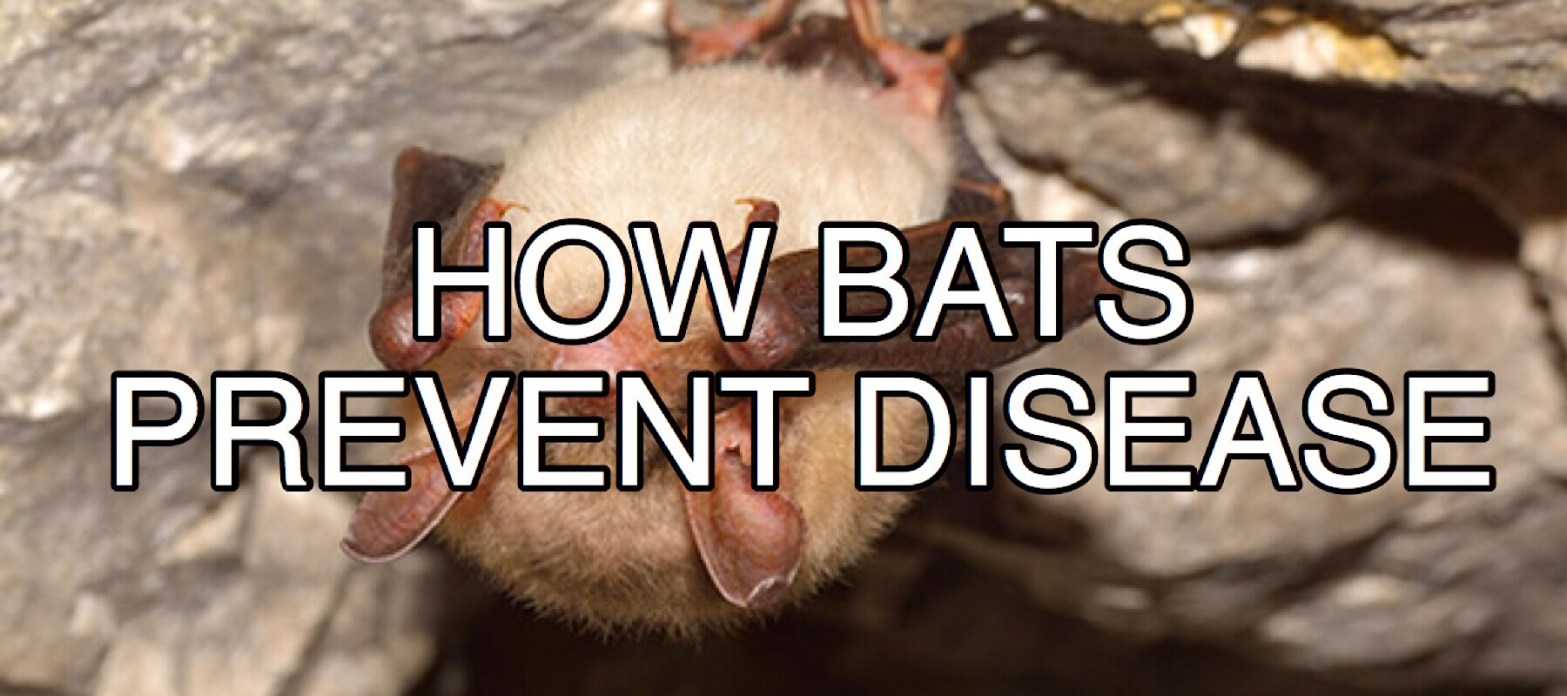
How Bats Prevent Disease

Did you know that a single little brown bat can eat up to 1,000 mosquitoes in one hour? Worldwide, mosquitoes are responsible for more illnesses and deaths in humans than all other animals put together. When mosquito populations rage out of control, so do rates of diseases like malaria, West Nile Virus, dengue, and zika— plus many illnesses affecting pets and livestock, such as heartworm and equine encephalitis.

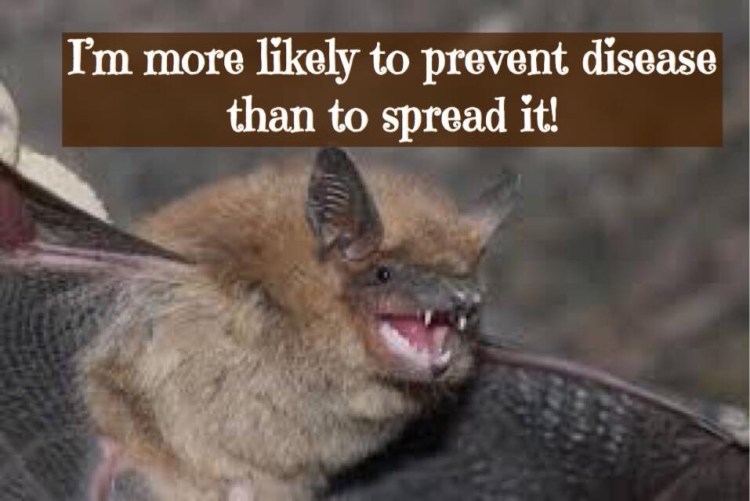
Because bats sometimes carry rabies, many people live in extreme fear of catching diseases if there are bats around. In reality, bats deserve the opposite reputation— as disease preventers rather than disease spreaders. We can help reduce the rapid spread of mosquito-borne illnesses by building bat houses, protecting bat habitat, and electing to relocate (rather than exterminate) bats found in human homes, whenever possible.

Of course, it is always important to be wary of rabies. Although only about 1% of bats have rabies, you should never handle a bat, and should seek emergency care immediately if you were bitten by one. However, simply having bats in your area doesn’t pose a danger. It actually helps protect you!

Red Raccoons?

This raccoon’s beautiful coat is caused by erythrism, a genetic condition that causes reddish pigmentation of the fur and skin. Erythrism in raccoons usually runs in families. It isn’t harmful and, other than making them more likely targets for fur trappers, erythrism doesn’t affect a raccoon’s life expectancy.

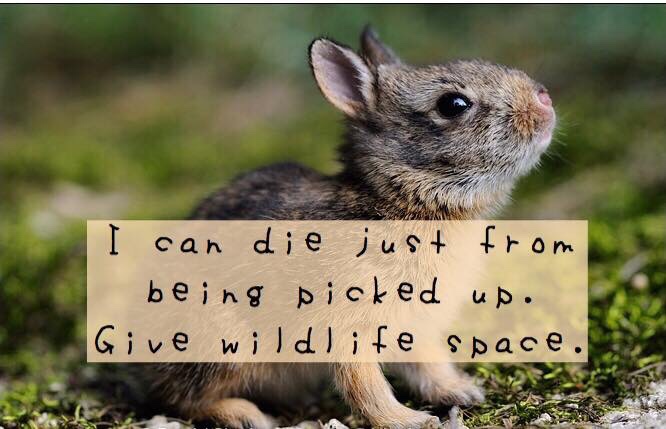
Capture Myopathy: The Risks of Picking Up Wildlife

Wild animals— particularly rabbits, fawns, and birds— are prone to a condition called capture myopathy. This is a complex disorder that results from the stress of being chased, captured, or even simply held by a human being. Although there are usually no signs of disease or injury, these animals simply die.

Please: never capture or handle an animal unless instructed to do so by a wildlife rehabilitator. Otherwise, you run the very real risk of killing an animal that you intended to save.