Grey Foxes on the Decline

Three hundred years ago, grey foxes were much more common throughout the U.S. than wolves, coyotes, or red foxes. That’s because we had more old-growth forests and these beautiful animals thrive in areas with large, knobby trees with hollow openings, which are their preferred dens. They also use trees for climbing and hunting. That’s right: a dog that climbs trees!

The last few centuries have brought a sharp population decline to the grey fox due to the loss of our old-growth forests. Although they are not endangered yet, they have been largely displaced, particularly in the Eastern half of the country, and their homes need protection.

Predators Aren’t Evil

We don’t call rabbits cruel when they eat clovers. We don’t call squirrels cruel when they eat acorns. We don’t call our children cruel when they eat cereal, or even call our dogs cruel when they eat beef bones.

Yet predators, in nature, get a bad reputation. I have seen people who consider themselves to be advocates for animal welfare, justifying killing animals such as foxes, bobcats, and coyotes because they find it cruel that these animals hunt and eat their own natural prey. In my own neighborhood last year, a neighbor called for someone to “do something about” a fox who was seen on her property because it had killed a wild cottontail.

In another case, a man intervened and chased away a hawk that had snatched a fledgling robin, and then brought the robin to me for rehabilitation. The robin was too badly injured to survive and needed to be euthanized, but the unfortunate hawk never got to finish his meal.

Predators aren’t cruel or villainous. They simply are. And they fulfill a vital role within nature. When predators are removed from any ecosystem, it causes a catastrophic increase in the number of prey, which can lead to the total collapse of an ecosystem. In areas where large predators have been removed, whitetail deer are now so severely overpopulated that they pose a serious threat to forests and suffer from unprecedented rates of disease and starvation. It isn’t cruel to allow natural predators to hunt their natural prey— in fact, it’s far more cruel to remove those predators from the systems that depend on them.

It’s understandable to have sympathy for prey animals. But please remember that predators need to eat, too, and that their role in the natural world is a vital one.

Why Do Skunks Smell Like Weed?

I am a big fan of the furry type of skunk, personally. As a licensed skunk rehabilitator, I transport these amazing creatures frequently in my car and have been sprayed a few times while rescuing upset animals.

The resemblance between skunk musk and marijuana has, unfortunately, led to some awkward encounters. “Yes, sir, I do have an actual skunk in my vehicle, and nothing illegal.”

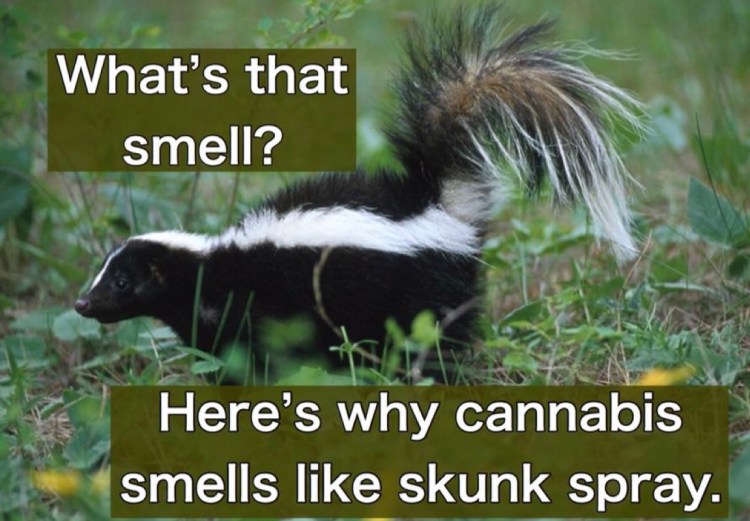
So what’s up with the resemblance? Here’s the scoop on skunk: a skunk’s distinct smell comes from three types of organic sulfur compounds, known as thiols. Thiols are intensely musky and overpowering, which is what makes them such potent weapons.

Cannabis doesn’t contain thiols, but it does contain hundreds of compounds known as terpenes. Terpenes include the spicy-smelling compound caryophyllene, the citrusy compound limonene, and the musky compound known as myrcene. Myrcene is the chemical in marijuana that is most distinctly similar in scent to skunk spray.

In the 1970s, Dutch growers in the United States cultivated a hybrid cannabis strain called “Skunk” that was unusually rich in myrcene. The strain became more and more potent in time and became a parent breed to many other types of medicinal and recreational marijuana. That’s why many kinds of cannabis used today smell skunky.

Why Won’t Rehabbers Answer Me?

It’s terrifying to have a wild animal in need of help, but to be unable to reach someone who can provide the care it needs. It’s no wonder that people sometimes get frustrated and even infuriated with wildlife rehabilitators, who might take hours or even days to return a phone call.

Many people envision wildlife rescue centers as large offices, with full-time paid staff, who can drop everything and help in any emergency. Unfortunately, that’s not the reality of wildlife rehabilitation in most parts of the U.S.

The vast majority of the time, when you call a wildlife rescue, you are calling an individual volunteer or a small group of volunteers, permitted to operate out of their own homes. Because almost all rehabbers are volunteers, most of us have full-time day jobs, as well, and many of us have children and spouses.

If you call For Fox Sake, for example, you’re actually calling my personal cell phone. I always try to respond to all calls the moment I’m available, but I might be busy with as many as fifty animals at once. I might be at a parent-teacher conference for one of my three children. I might be responding to another wildlife call, or reading bedtime stories to my babies, or even just getting some much-needed sleep. I rehabilitate animals because it is my passion, but it’s not the only thing I do, nor is it actually my “job” or something I get paid for.

Please be patient. Rehabbers want to help and we are all doing our best, but most of us only have two hands, one body, and twenty four hours in the day.

Is It Bad To Feed Raccoons?

I would never be upset with anyone who is trying to help wildlife. I love Tennessee’s native wildlife so much that I’m dedicating my life to protecting them. If you follow For Fox Sake, you obviously care, too. For many wildlife lovers, feeding raccoons and other animals seems like a great way to give your wild neighbors a hand.

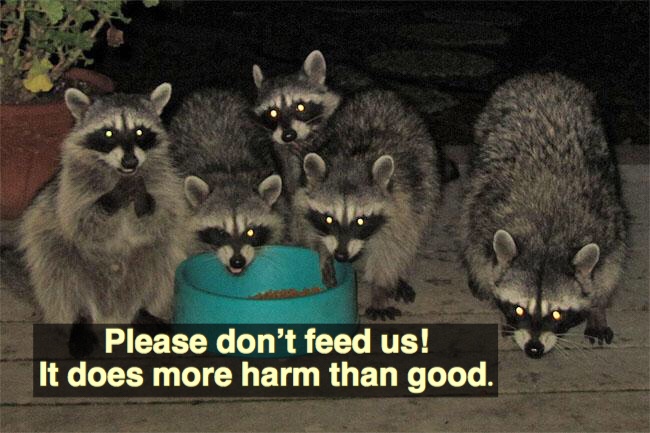
The problem is that this almost always backfires catastrophically. Here are a few examples of ways that I have personally witnessed raccoon-feeding go horribly wrong:

-Last summer and fall, I received to 29 calls about raccoons with distemper— a very serious viral infection— in one small area on Chattanooga’s North Shore. Those 29 raccoons didn’t even include the ones that were picked up by our local animal control or dispatched on site by police. When responding to one of the calls about this epidemic, I was informed by the caller that he “took care of” a large colony of wild raccoons, skunks, opossums, and feral cats, who would come to his house nightly to feed. This man didn’t mean to do it, but by creating a small area where animals would gather and eat from the same dishes, he had made his home ground-zero for a fatal epidemic. To make matters worse, this cross-species virus likely went on to infect many pet dogs in addition to native wildlife.

-I received a call last summer about a pair of adolescent sibling raccoons who were “tormenting” people in their neighborhood by begging for food and attempting to break into houses. They began doing this because someone in the neighborhood had fed their mother when she was nursing, and she taught her sons to seek out humans for food. The raccoons were ultimately declared pests and killed, through no fault of their own.

-A young child in had become accustomed to their nightly raccoon visitor. As children tend to do, the kiddo decided to befriend the critter and snuck outside to pet it. The raccoon was startled and bit the child, who needed a series of painful, expensive post-exposure rabies shots.

If you want to help wildlife, there are much better ways to do so than by feeding them. You can volunteer at your local nature center or wildlife rehabilitation center, or make a donation of food, funds, or supplies. You can make responsible choices like recycling and using less plastic. You can choose to keep your pets fully vaccinated to avoid contributing to the spread of diseases in wildlife. Depending on your state regulations, you might consider offering your property as a release site for rehabilitated wildlife.

We should all take steps to care for wild animals. Let’s make sure those steps are the right ones.

The Silver Fox is a Red Fox

If you’re lucky, you might spot one of these beautiful creatures in the wild one day, including right here in Tennessee. Although often mistaken for an exotic pet or the distantly related grey fox, this animal is actually the exact same species as the familiar red fox. Like a black cat or panther, a silver fox has a trait known as melanism that increases the amount of pigment in its skin and fur. Silver-coated red foxes can occur anywhere in the world where red foxes naturally exist, and often have parents, siblings, mates, and kits with the more familiar red coats.

The Puma: Tennessee’s Most Endangered Mammal

I was a teenager in 2004 when I spotted the tracks, in a summer-dried creekbed not far from my family’s home in small-town West Tennessee. I examined them over and over again, first by memory and then with my worn-out field guides, confirming without a doubt that they came from a puma.

The puma— also known as the cougar or mountain lion— is Tennessee’s very own unicorn. Though the official word is that these elusive animals vanished from the state in the early 1900s, residents never stopped believing, and often reporting, their continued existence. In fact, when I had called TWRA with excitement after spotting tracks, the wardens were unimpressed, casually mentioning that they’d had a few reported cougar sightings in my county. They suspected that the cats were illegal exotic pets from Memphis, released along I-40 when their owners tired of them.

The sightings continued, though, and have only gained momentum in recent years. Since 2015, there have been dozens of confirmed sightings of pumas on West Tennessee’s trail cameras and hundreds of unconfirmed sightings marked only by the witness’s word. At this point, there’s no doubt: the cougar is back in Tennessee.

The intriguing question, though, is whether they were ever truly gone. Wildlife officials currently believe that pumas have moved back to our state by migrating from the West. Others believe that small populations of pumas always existed in the remote mountains of East Tennessee and have simply recovered enough to come out of hiding. Personally, I think both are true, and that a few individuals from our eastern mountains are now joining with their distant cousins from the West.

Of course, that raises the question of how an animal as large as a cougar could have possibly gone unnoticed— or at least unproven— for over a century. But, if any animal can evade detection, it’s a puma. Mountain lions spend their days unseen, coming out only at twilight to hunt, usually far from any human settlements. They very rarely step in mud, so it’s rare for people to find their tracks in areas like Tennessee, where snow is uncommon, and many parts of rural Tennessee have few trail cameras and are rarely explored. It’s certainly within the realm of possibility that these secretive cats managed to hide for over a century.

Regardless of whether pumas were ever truly absent from this state, we know now that they’ve here now, and that they need protection so they can continue their recovery.

Found a Baby Bird? Don’t Feed It!

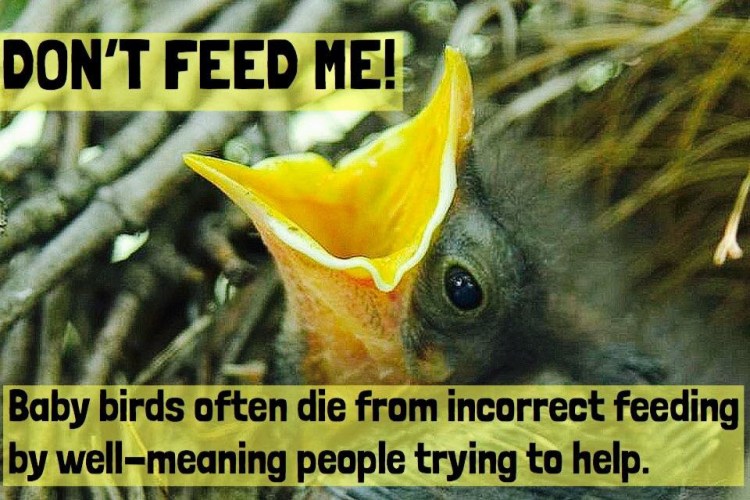
Found a baby bird on the ground? Your first impulse is probably to feed it, especially if it’s gaping and crying out in hunger. But this is one of the worst things you can do. Feeding a baby that is dehydrated or hypothermic can make it extremely sick. So can incorrect foods for its age or species. Earthworms aren’t actually in most baby birds’ natural diets and can give them fatal parasites, while liquid formulas can easily drown the baby when fed by an inexperienced caregiver. Breads, crackers, and milk can cause terrible diarrhea and pain. If you found a baby bird that is clearly too young to be on its own, find out how to properly warm and renest it. Resist the urge to give it food.

Can I Relocate a Raccoon?

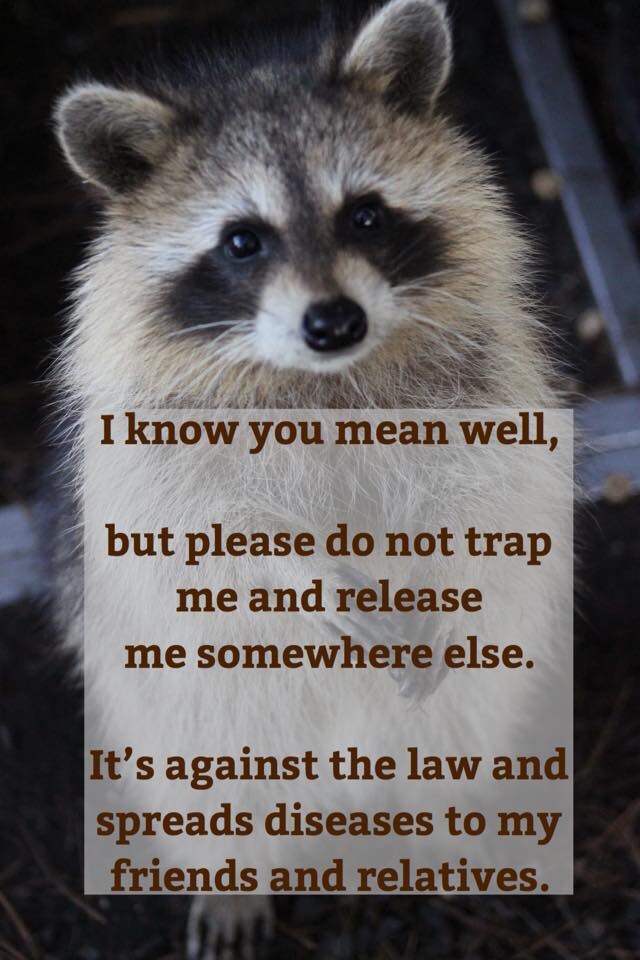
Although regulations vary from state to state, Tennessee law forbids people from trapping raccoons and releasing them anywhere besides the property where they were found. This is because, even if a raccoon appears healthy, it may be carrying a disease such as rabies or canine distemper. When the raccoon is moved to another area, it spreads the disease to that population and may cause an epidemic. The best way to get raccoons to leave your property is to use humane harassment techniques, such as bright lights and loud music, to encourage them to leave on their own.

The Stink-Goddess Skunk

The ancient Samnites did not know about skunks, but they did know about the balance of the natural world. It’s fitting that their goddess of foul smells was not evil, but was also a symbol of love, devotion, motherhood, and strength. Scientists made the right decision in naming the striped skunk— which was valued in pre-colonial North America for these exact same traits— after her.