Should We Kill Foxes to Prevent Rabies?

Do you kill random humans, just in case they have ebola?

Foxes, skunks, and raccoons are routinely killed because of their reputation as rabies vectors. While rabies is a problem, destroying healthy animals does absolutely nothing to control the spread of disease. It just causes unnecessary death and suffering.

You can prevent rabies by having your pets vaccinated, supporting vaccine initiatives for feral cats, supporting oral rabies vaccines for wild animals, and reporting any animal you see that has rabies-like symptoms (staggering, aggression, excessive drool, seizures, unusual vocalizing). Senseless killing isn’t the answer.

Pet Body Armor Protects Against Wildlife

Hawks, coyotes, bobcats— and in some areas, wolves and bears— can be scary for owners of pets and working animals. But killing wildlife is inhumane, ineffective, and often illegal as a method of protecting pets. So what’s a pet owner to do?

The best way to protect pets is to keep them either indoors or supervised at all times, but of course, this isn’t possible for everyone, particularly for owners of working dogs.

Pet body armor is an excellent way to make sure your pet is protected without having to resort to harming wildlife. These products come in multiple forms, ranging from simple Kevlar vests to intricate combinations of studs, spikes, and even external electric shock. Some companies also add “whiskers” to the backs of their body armor, to give the wearer an intimidating bristled-fur look that makes them look unfamiliar and dangerous to predators.

Please don’t harm wildlife. But protecting your wild neighbors doesn’t mean that Fluffy has to be left vulnerable to attack.

Tennessee’s Alligator Snapping Turtles

Did you know that alligator snapping turtles are the only turtle species that carries its own fishing lure? When an alligator snapping turtle opens its mouth and wiggles its pink, worm-like lure, fish come from far and wide and wander straight into the turtle’s mouth.

This enormous creature– not to be confused with it’s smaller cousin, the common snapping turtle– can grow up to 220 pounds and eats a diet comprised of fish, amphibians, crayfish, carrion, snakes, worms, and water birds.

The alligator snapping turtle is a native Tennessee species found primarily in the western half of the state. The species has faced serious problems over the years. Poaching, habitat loss, and pollution drove them to near extinction, but TWRA has partnered with organizations such as the Nashville Zoo and Tennessee Aquarium to help restore their populations.

How I Got Banned From Facebook for Reporting Animal Abuse, and the Animal Abuser Did Not

(Update: As of 12:00 pm on January 6, the video depicting the torture and death of the puppy is still on Facebook. The abuser is still actively posting on Facebook, including a video where he is playing with a new puppy to prove that he is “not a bad guy.”)

Dear Fellow Animal Lovers,

The For Fox Sake website isn’t intended to log personal issues or complaints outside of the world of Tennessee wildlife. However, since I’ll be absent from managing For Fox Sake’s Facebook page for the next thirty days, I believe I owe an explanation for my absence– particularly if you are trying to reach me for an urgent matter related to Tennessee wildlife, or are requesting updates about an animal in rehabilitation in my care.

On Wednesday, January 2, a man local to For Fox Sake posted an extremely graphic video of a puppy being shot five times. In the video, the puppy is audibly crying and struggling while the sadistic gunman shoots it repeatedly, expressing no remorse whatsoever.

The story was picked up by local news, though please be warned that there may be graphic images and videos contained in that coverage.

Facebook repeatedly determined, despite hundreds of reports of the video for criminal activity and graphic violence, that the video did not violate their community standards. Facebook Community Standards apparently allow graphic depictions of felony animal abuse.

What they don’t allow?

This:

My post, requesting that my friends report the video to Facebook, is somehow against the rules, while a man’s graphic abuse of his dog is found to be acceptable.

And because of this, I can’t be online for the next thirty days to manage my nonprofit. Fortunately, my spouse is a co-administrator for the page, but since she is not a wildlife rehabilitator herself and works a full-time job, she’s limited in what she can do for the page. Therefore, if you have an urgent issue pertaining to wildlife, please contact me by email at forfoxsakewildlife@gmail.com or by phone or text at (423) 475-2691.

I will be continuing my duties to provide care and assistance for Tennessee’s native wildlife, but can’t update page followers about the animals’ conditions or needs.

I’ll be back in 30 days to resume maintenance of the For Fox Sake Wildlife Rescue Facebook page.

Thank you all for your continued support.

Juniper Russo, CWR

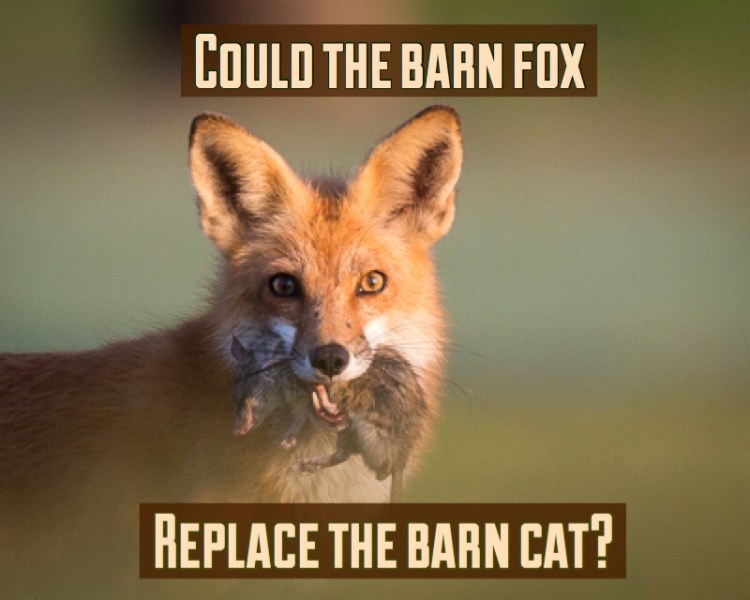
Can Barn Foxes Replace Barn Cats?

As strange as it may sound, “barn foxes” might be the solution of the future to rodent control in sustainable agriculture.

It’s no secret that outdoor-roaming cats wreak havoc on native wildlife in the United States. In fact, multiple studies have demonstrated that outdoor cats present the single greatest threat to wildlife in North America, even compared to traffic, habitat loss, and climate change.

Outdoor life isn’t great for the kitties, either. Indoor-only cats can be expected to live to an average age of 17 years– sometimes even into their twenties– while their free-roaming counterparts usually succumb to disease, fights, predators, traffic, or human cruelty before their fifth birthdays.

When veterinarians and wildlife biologists encourage indoor-only homes for cats, the most frequent objections come from people who own small-scale farms. How can a farmer manage rodents in their barns without the help of barn cats? After all, humans have been using cats for rodent control since the earliest days of domestication.

European settlers brought the tradition of “barn cats” from Europe, where European wildcats– which are the same species as domestic cats and closely related to them– exist naturally and have co-evolved with their prey so they cause little damage to the environment. But this age-old tradition doesn’t work out so well in the United States, where house cats and their relatives only recently moved.

Despite the reputation they carried with them through settlers, house cats and “barn cats” in the United States are actually very bad at rodent control. The largest study of its kind found that outdoor cats actually tend to ignore rats, killing only three of them and often walking right past them to target smaller prey, like voles, lizards, and songbirds, decimating the populations of these native, more vulnerable animals.

Enter the barn fox.

Red and grey foxes eat slightly larger prey than cats, making them prime candidates for wiping out an infestation of rats in a barn. Foxes in general eat relatively few small birds and lizards because their chase-and-pounce hunting technique doesn’t work well on most of them, and many are too small to be worth the energy a fox might put into hunting them. And, when a fox is native to the area where it hunts, it’s extremely unlikely to have a serious adverse effect on native wildlife because its prey has co-evolved with it and the two animals have coexisted sustainably for millennia.

Some farmers are hesitant about allowing foxes on their land due to their reputation as livestock killers, but much of that reputation is undeserved. Red and grey foxes in the United States are much smaller than many people imagine and account for less than .02% of sheep and lamb losses, and effectively no cattle losses, in the United States, according to the USDA. While foxes do pose a threat to chickens, so do the “barn cats” and free-roaming dogs they might replace, which is why it’s critically important to keep poultry animals adequately contained with non lethal repellent measures.

You can’t exactly pick up a wild fox on Craigslist to move it into your barn, but you can offer your farmland as a release site for wild foxes that need a new home, and can prohibit hunting of foxes on your land, to encourage these helpful critters to move in and help control pests.

Does this mean that barn cats need to be killed? Of course not! Barn cat programs are an excellent way to rehome feral cats that can’t be rehabilitated to indoor life as pets. These rehoming programs are an excellent alternative to simply allowing barn cats to breed unchecked, or to euthanizing feral cats.

But, as animal lovers nationwide start to work to reduce the number of homeless and outdoor cats, we need to start rethinking the tradition of the “barn cat,” and giving native wildlife the chance to control rodents within their own natural territories.

“Coats for Cubs” Gives Fur Back to Animals

In 2019, For Fox Sake will be participating in the Coats for Cubs program organized by Buffalo Exchange! There’s no way to give fur back to the animal that was born wearing it, but this program is certainly a step in the right direction.

When orphaned animals arrive at rehabilitation facilities, they’re often very scared and stressed, and this stress can sometimes lead to sudden death, poor appetite, hypothermia, or growth problems. Real fur has the look, smell, and texture of the animal’s natural mommy, so it can help an orphaned baby feel safer and more comfortable, leading to better outcomes.

Coats For Cubs accepts donations from people who own fur clothing items, but choose to no longer wear them, and ships these furs to rehabilitators all over the country. It’s one small way of helping wildlife and making sure that furs don’t have to be wasted.

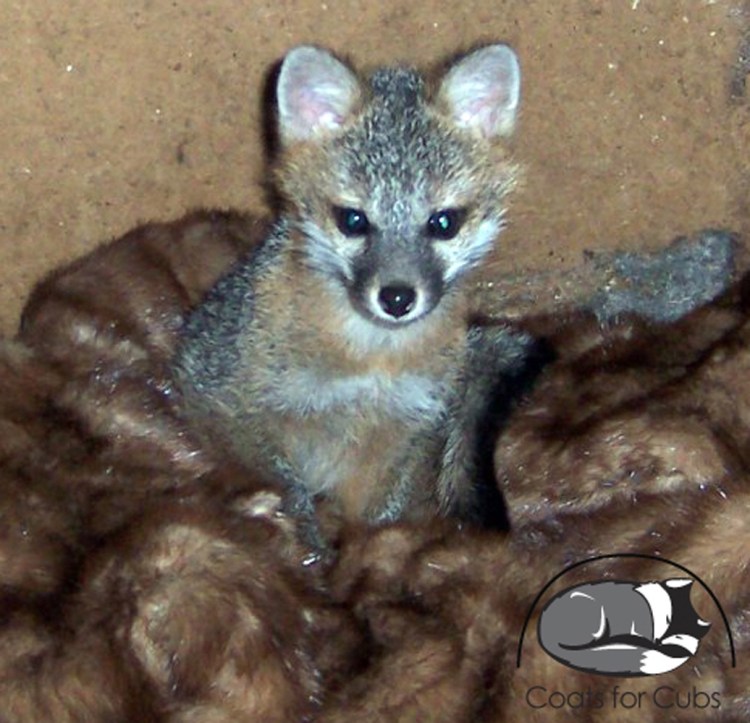
This photo of a sweet grey fox kit was taken at another facility that receives Coats for Cubs, but we look forward to having our own photos to share in the future!

Mange vs. Shedding in Foxes

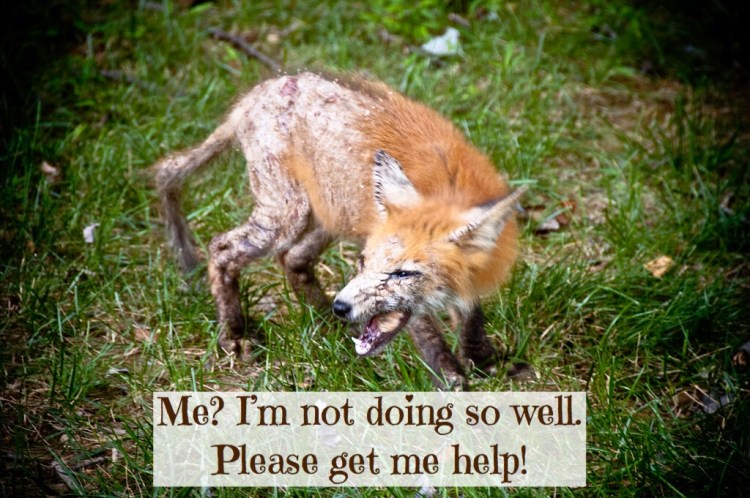
When you think of foxes, you probably picture a fluffy animal with luxurious, beautiful fur. For some species and subspecies of fox, this can be an accurate image, but for foxes in temperate regions like ours, it only tends to apply during the cooler months. During warm seasons, both red and grey foxes shed so much fur that they are often mistaken for having mange.

A fox that is naturally molting, or shedding its fur, will usually have a layer of fairly short fur– the fox’s newer, cooler summer outfit– covering its entire body. In addition to this new fur, the fox will likely have clumps of long, shaggy fur– its old winter coat– still clinging to some areas, particularly the back and neck, which are hard for the fox to self-groom.

Of course, some foxes do have mange, a horribly itchy condition caused by microscopic mites burrowing in the skin. These animals are not only immensely suffering, but they can sometimes present a health hazard to pets and humans, so it’s important to report them to your local animal control, game wardens, or wildlife rehabilitators if you spot them.

A fox with true mange doesn’t have fur over all parts of its body. Instead, it will have entire patches where the fur is very thin or even completely absent. In severe cases, a fox with mange might even lose its fur entirely.

Aside from hair loss, distinct signs of mange include redness, scabbing, “sick” behavior (such as staggering and lethargy) and constant scratching.

If you do report a fox with mange, be sure to keep an eye out for any other mangy animals in the area. Some forms of mange are contagious not only between foxes, but also across species, and could infect neighborhood coyotes, raccoons, livestock, cats, and dogs. By reporting any additional sick animals you see, you can play a big role in helping prevent disease outbreaks in your area.

Do Coyfoxes Exist?

Many people would mistake this animal for a coyote-red fox hybrid.

I’ve gotten a number of calls, comments, and texts from people who believed they had found a coyfox, a hybrid between a coyote and a red fox. It’s an understandable mistake to make. Many people, especially here in the Southeastern U.S., might encounter an animal that looks too big to be a fox but has reddish fur and a big, bushy tail.

As cool as it would be if they were… these animals aren’t coyfoxes.

In general, animals can crossbreed only if they’re very closely related and have the same number of chromosomes, or just a very slight difference in their number of chromosomes. For example, a horse has 64 chromosomes and a donkey has 62 chromosomes, and they are members of the same genus, Equus. Because of this, they can have offspring (mules), which happen to have 63 chromosomes, and are generally sterile.

Domestic dogs, coyotes, red wolves, and every subspecies of grey wolf are all very closely related. All these animals, which can be found in North America, are members of the same genus (Canis) and all have 78 chromosomes. They can cross freely and have fertile offspring.

A red fox is a member of an entirely separate genus from these animals, since they parted ways long ago in their evolutionary history. A red fox has 36 chromosomes (though interestingly, some of them can have one or two fewer or more). That’s a huge, huge difference between the number of chromosomes in a fox and in a coyote, so it’s essentially impossible for a living embryo to be born to both species… not to mention, a coyote would be very unlikely to choose to mate with a red fox in the first place.

Domestic dogs– even foxy-looking ones like shiba inus and Pomeranians– aren’t able to breed with red foxes, either. The only exception was in a laboratory study of the genetic differences between red foxes and dogs, where scientists were able to splice the genes of the two animals into one cell. Of course, that didn’t result in a dog-fox hybrid actually being born.

Red foxes don’t produce hybrids with other foxes, either. Although they could theoretically crossbreed with kit foxes or swift foxes, it’s never actually been known to happen. Grey foxes are only very distantly related to red foxes and can’t possibly reproduce with red foxes, either.

There was some speculation in recent years that red foxes might cross-breed with arctic foxes as a response to climate change, but that hypothesis was ruled out. It would have been pretty shocking since arctic foxes have 50 chromosomes— but the genetic tests revealed that the “hybrids” were just arctic foxes with unusually red summer coats.

So what’s the answer to the mystery of the coyfox? It’s both simpler, and more interesting, than you might expect! An animal that looks like a coyfox is, most likely, a coyote with either erythrism (a condition causing reddish fur coloration) or leucism (a condition causing blonde or gold coloration). Most coyotes with these genes are not “pure” coyotes, but distant descendants of wolves and feral dogs. Leucism, in some coyotes, has been linked to a male golden retriever who joined a coyote family decades ago in Newfoundland, while erythrism in Southeastern coyotes seems to be a legacy of the red wolf, which is now extinct in the wild.

Why Do You Rescue Vermin?

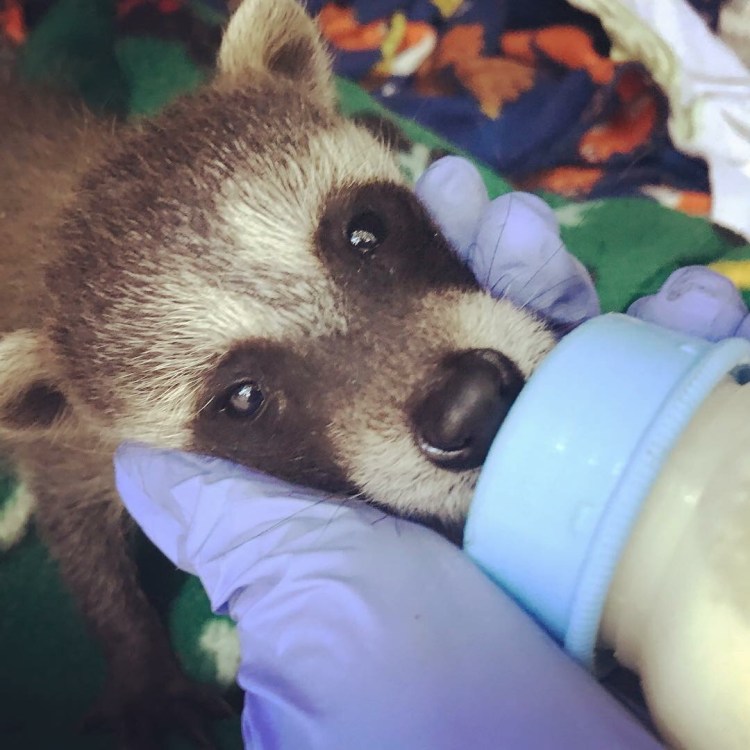
A raccoon kit.
Wildlife rehabbers sometimes save animals that might be considered pests.

It’s an understandable question. To someone who’s had their attic destroyed by raccoons or their chickens tormented by foxes, the goals of For Fox Sake can seem unreasonable– or even downright irresponsible. So why rehabilitate animals that aren’t endangered?

For Fox Sake handles skunks, foxes, and raccoons, which, in our state, are categorized as rabies vector species. Of these, Eastern spotted skunks are critically endangered in Tennessee, and grey foxes are facing a sharp population decline. Those two species are definitely very important to rehabilitate for conservation purposes.

As for striped skunks, red foxes, and raccoons?

The purpose in rehabilitating these common species isn’t to help the species as a whole, but to help the individual in order to prevent suffering. Rehabilitating these potentially rabid species gives the general public a safe alternative to “DIY” rehabilitation, which is cruel to the animal and dangerous to the handler.

We also help improve the general health of the populations of these animals in our area, and to help track the spread of disease, by euthanizing dozens of sick animals each year and submitting their bodies for testing– a critical component of controlling the spread of infectious diseases that can wipe out entire animal populations.

All animals are vaccinated for rabies, parvo, distemper, and parainfluenza on intake here, which, in combination with the USDA’s oral rabies vaccine program in our area, helps to improve “herd immunity” to diseases that can endanger humans and livestock.

Not happy with the idea of raccoons and foxes being released in your neighborhood? No worries there. Animals at For Fox Sake are only released in suitable habitats with the permission of the landowner. No one is planning unleashing hoards of vermin on your property.

How Do I Get Rid of Armadillos?

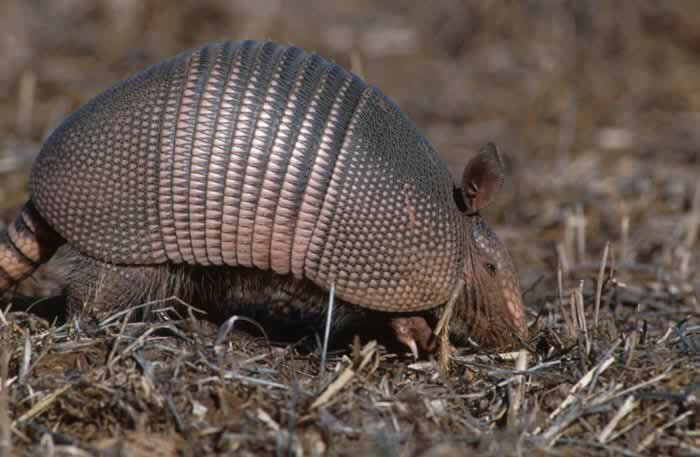
A nine-banded armadillo.
Armadillos may become pests. How can you get rid of them humanely?

Do you have armored critters digging in your back yard? As climate change takes its toll on the landscape of the US, armadillos are slowly marching North. Armadillos are generally warm-weather critters, which is why they didn’t live outside the tropics and subtropics until recent changes in climate. An armadillo in a temperate area may be tucked up in your barn or crawlspace is likely looking for a way to stay warm, and is also likely foraging for food.

The best way to deter armadillos, as with most nuisance wildlife, is to remove or secure food sources, such as outdoor pet food and fresh compost. If that’s not enough to dissuade your backyard armadillos, it’s probably because they’re munching on earth worms, grubs; and other backyard buggies. Be sure to also close crawlspace doorways and any other possible unwanted entry points.

There are several humane repellents you can try using. One option is castor oil (diluted 20/80 with water if you’d like to stretch it out). It will kill and spoil most bugs in the ground and has an odor that armadillos find unbearable, so it can be placed in or around holes dug by armadillos. Bitter and spicy repellents, like Bitrex and chili oil— which you can spray on the ground or on a fruit or pet food— can also cause the critters to associate your barn with nasty food, and they’ll move elsewhere.

It may be worth investing in motion-activated lights and noise not just to repel armadillos, but also other potential pests, especially if you have small livestock that might benefit from general repellents.

If none of these methods work to humanely get rid of armadillos, your state may allow trapping and relocation of armadillos. Note that relocation laws vary dramatically between states, and that relocating animals often leads to their death due to existing territorial issues and food limitations. When possible, it’s always best to encourage wildlife to leave on their own.